






Manufacturing picked up speed this quarter. The Institute for Supply Management Index (ISM) climbed to 55.5, its highest level in at least three years, and factories have begun hiring again. Busy ports and rail activity tell the same story: strong movement on goods but costs remain a challenge. Crude oil is nearing $100 a barrel, steel and copper are at three-year highs, freight remains expensive, and wages for skilled workers are rising faster. With factory construction down roughly a third from its peak, existing plants will need to carry more of the rising demand. Heading into 2027, manufacturers who set prices confidently and maintain a close eye on margins will be better positioned to come out ahead.
1. Manufacturing growth is accelerating
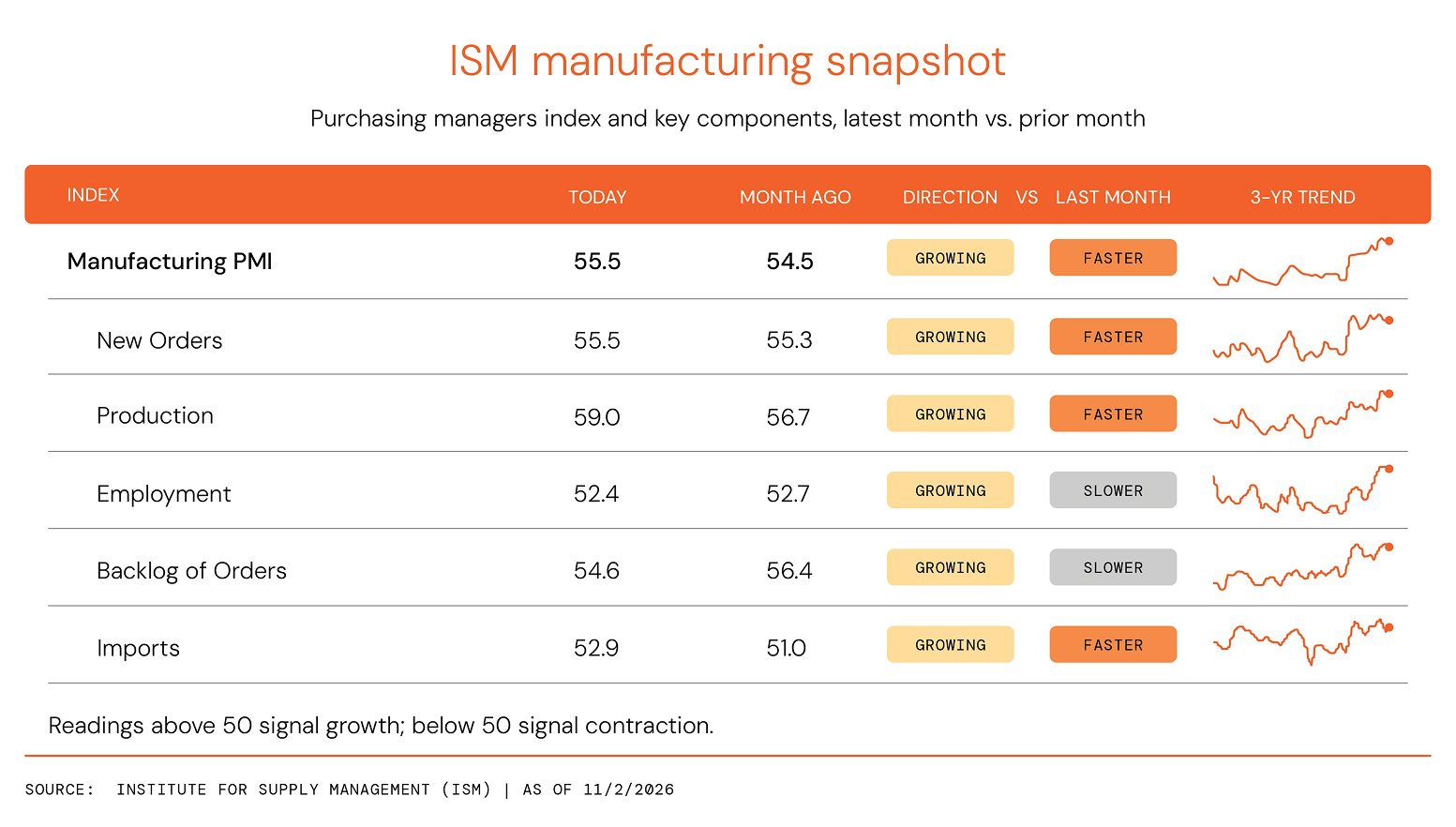
The headline Manufacturing PMI rose to 55.5, its strongest reading in at least three years. Production led the way with a sharp jump, while New Orders edged higher and Imports picked up as factories brought in more materials. The biggest change from last quarter is in Employment. The index sits at 52.4, up from 49.7 in June, which means manufacturers are now adding workers, not just getting more out of the ones they have. The lone soft spot is Backlogs, which slipped as plants work through their order books faster.
What this means for you: The expansion in manufacturing is broad, healthy, and accelerating. Lower backlogs and stronger production show factories are fulfilling orders faster, though the reserve of booked work is also shrinking. To sustain production, invest in sales resources that help grow your pipeline, and plan capacity around future demand. As hiring rebounds, expect greater competition for skilled workers.
2. Ports and railroads confirm strong economic activity
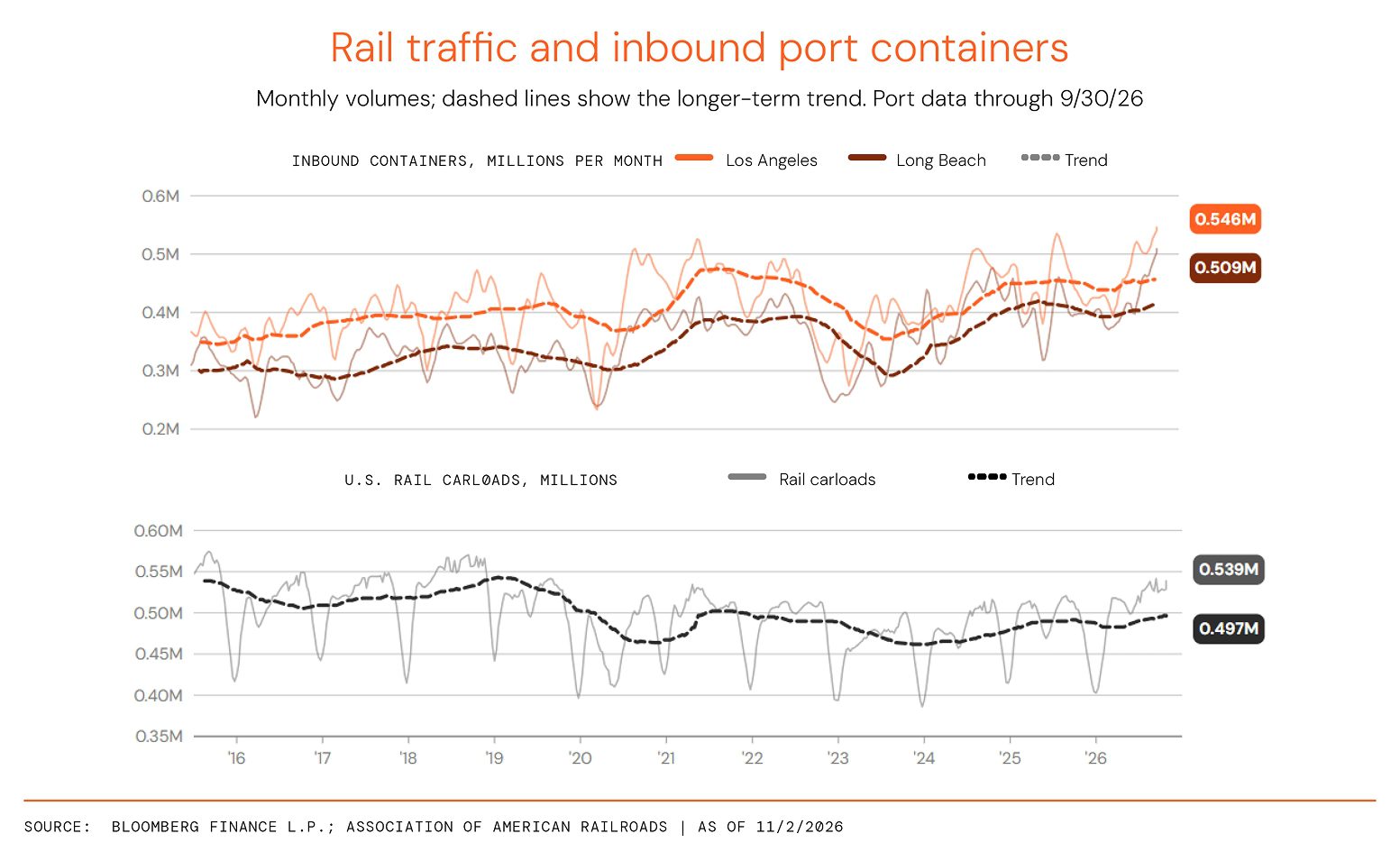
Logistics markets are surging on healthy economic growth. In September, the Ports of Los Angeles and Long Beach handled roughly 20% above their trend volumes, near the top of their 10-year range. Similarly, U.S. rail carloads are running about 8% above trend and rebounding from their 2023 lows. Some of the port surge may be importers getting ahead of possible tariff or policy changes, but the bigger story is the breadth of economic activity tied to reshoring, infrastructure investments, and AI buildout is having a positive impact.
What this means for you: When ports get crowded, everyone competes for shipping space, warehouse room, and trucks to haul containers inland. Reserve capacity as early as possible, verify supplier shipping schedules, and build extra safety stock for imported components that could get stuck in port delays.
3. Freight costs remain elevated
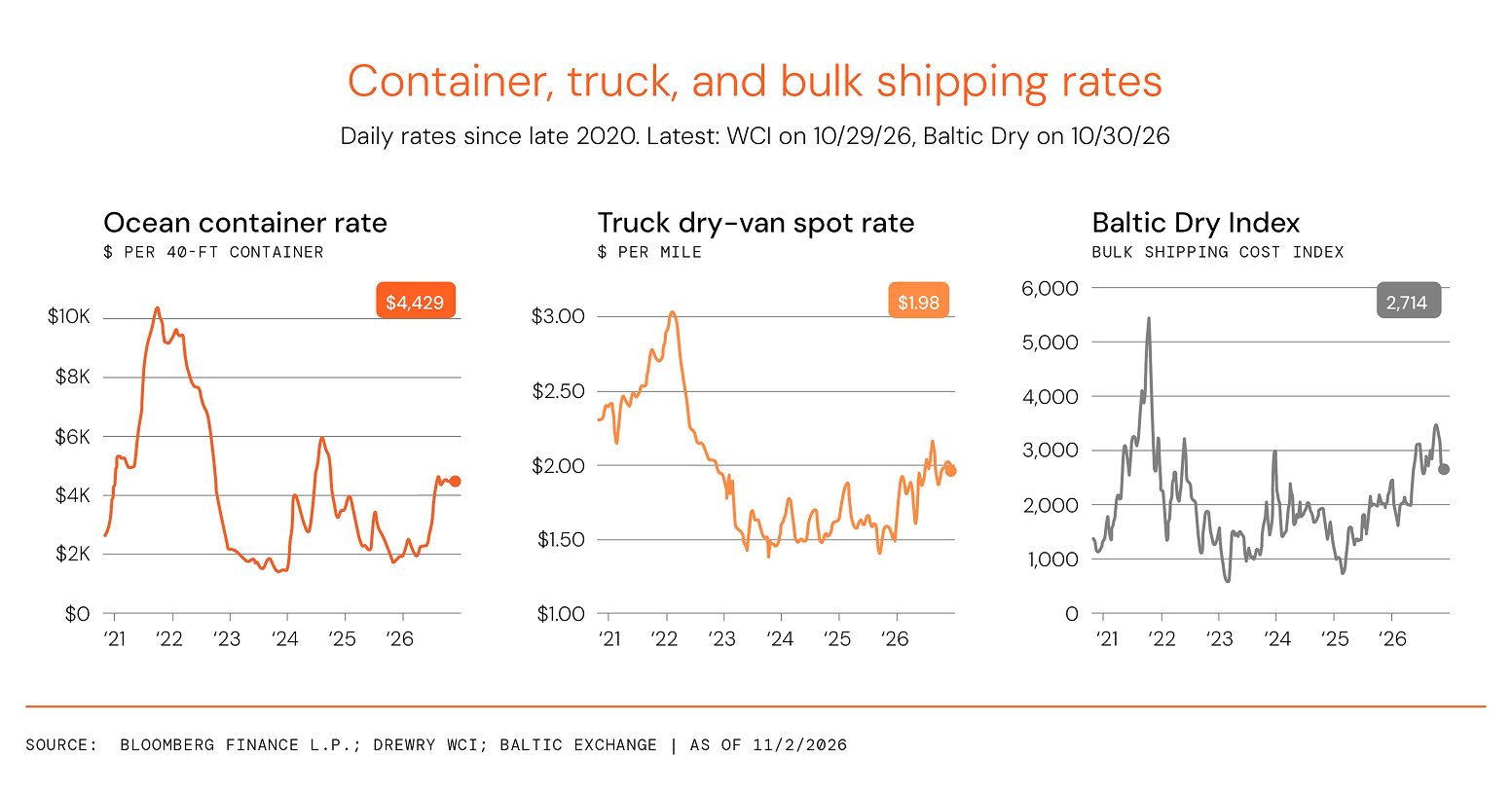
The World Container Index (WCI) Composite Container Rate, a benchmark for the cost of shipping a 40-foot container on major global routes, barely changed from last quarter. That’s well below the 2021 peak, but more than double the 2023 lows. In contrast, domestic trucking rates have cooled slightly, and the cost of shipping bulk raw materials such as iron ore, coal, and grain, has pulled back from its peak earlier this year.
What this means for you: The days of falling freight rates in 2023 and 2024 are behind us. With ports this busy, ocean rates are not likely to drop anytime soon. If imports are a significant part of your costs, consider locking in contract rates. Slightly lower trucking rates offer a brief opportunity to renegotiate domestic routes and make sure the freight assumptions built into your pricing reflect today’s rates.
4. Input costs: Oil joins steel and copper near the top
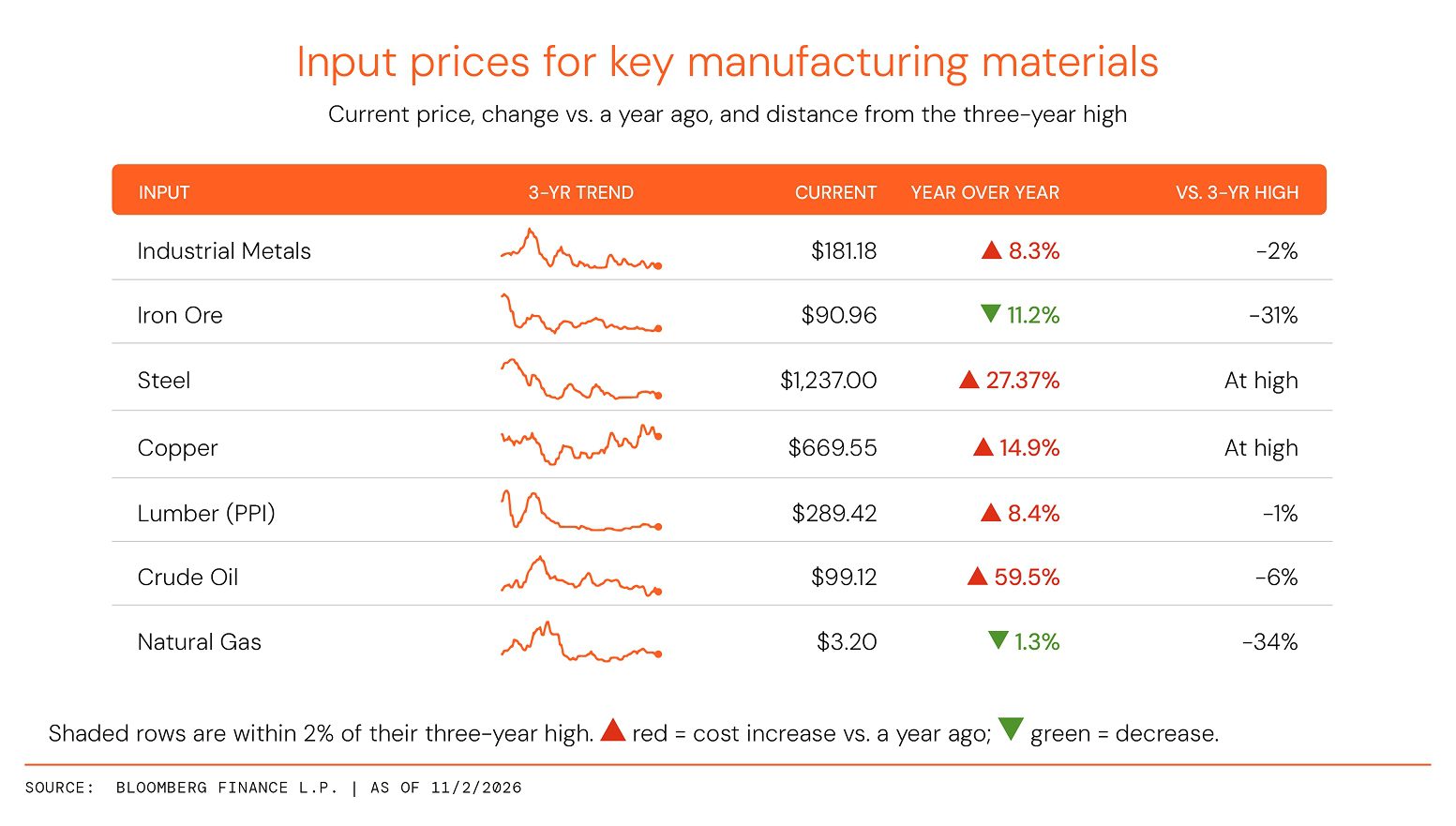
Input costs are running hot. Crude oil remains high, just 6% below its three-year peak, and steel (+27.3%) and copper (+14.9%) have posted sharp gains, both now at multi-year highs. Industrial metals and lumber have firmed up as well. The bright spots remain with iron ore and natural gas, which have largely sat out of the commodity price rallies.
What this means for you: Expect higher energy costs to show up in supplier invoices over the next few months, including in oil-derivative products and in goods that use oil in production. Now is a good time to review your sourcing strategy, see where your margins are vulnerable, and identify where there is pricing power. For example, you might add fuel surcharge language to both your customer and carrier contracts. For steel and copper, evaluate forward contracts or strategic pre-buys at current price levels, and consider locking in natural gas prices.
5. Manufacturing wage growth is picking up again
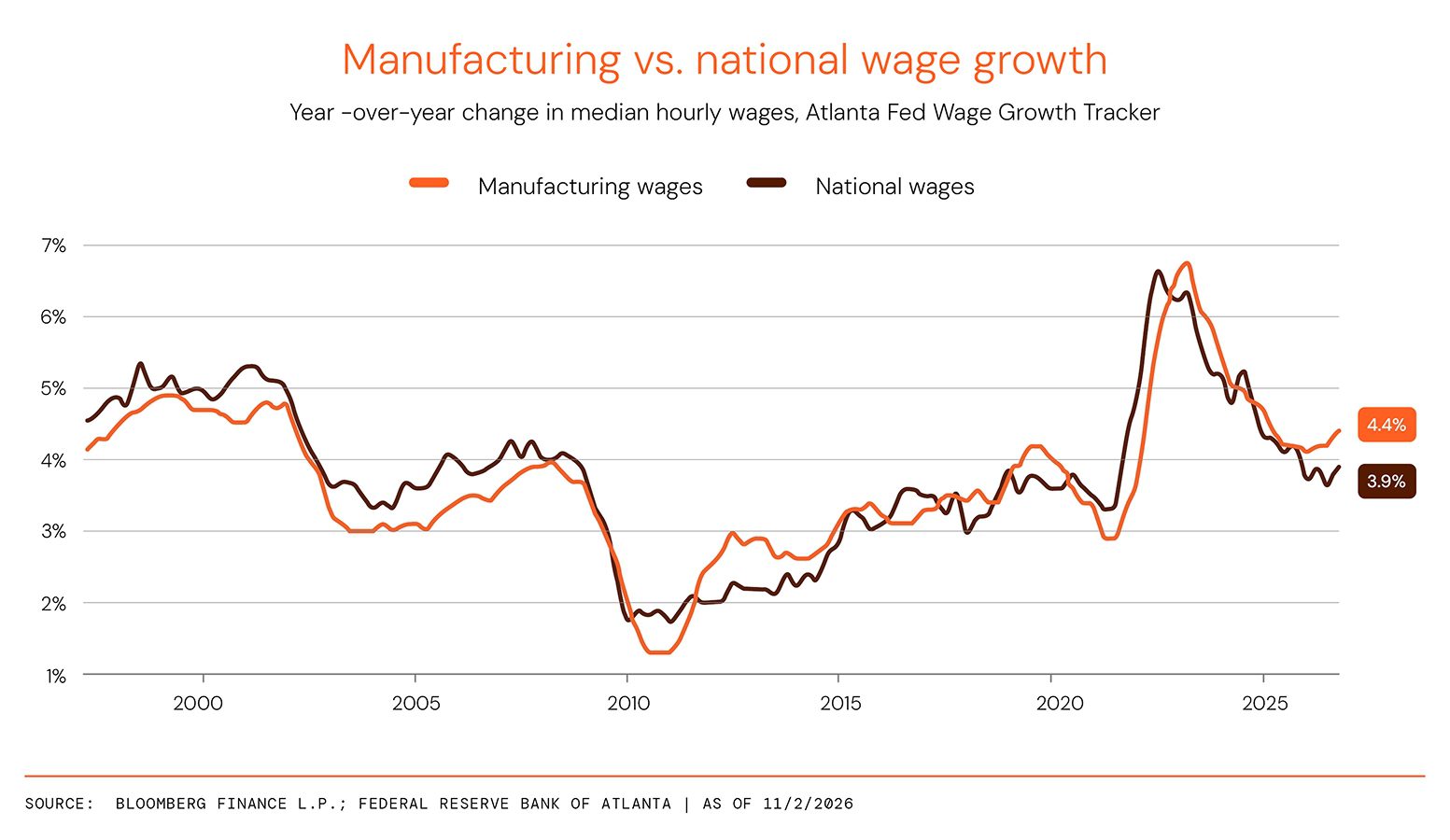
Manufacturing wage growth climbed to 4.4% year-over-year, up from last quarter and about half a point above the national average of 3.9%. That’s a turnaround from the steady cooling that followed the 2022 peak, and factory wage growth is now increasing. With the ISM Employment index moving above 50, manufacturers are once again hiring, and they’re paying more to do it.
What this means for you: The competition for skilled workers is heating up, especially for maintenance technicians, controls specialists, and experienced operators. Keeping these essential workers is almost always less costly than replacing them, so prioritize retention through compensation, training, and career development for your most valuable employees. Then build wage increases into your 2027 plans, and continue investing in automation for repetitive, lower-skill work.
6. Factory construction gas cooled from its peak
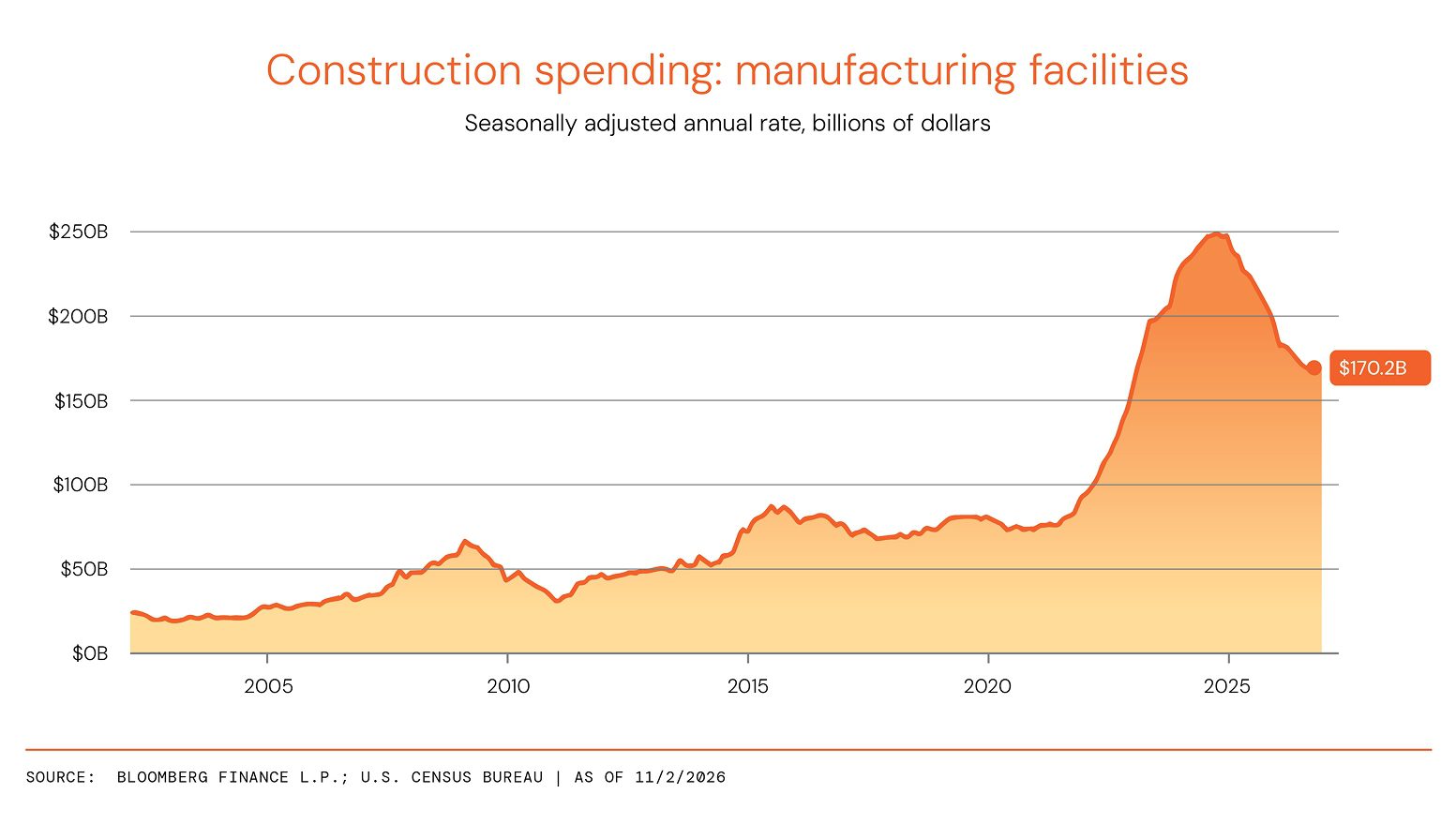
Spending on new manufacturing facilities has dropped to an annual rate of about $170 billion, down roughly a third from its peak. The decline is now leveling off, and spending is still about double its pre-2020 level. Much of the boom was driven by large semiconductor, battery, and electric vehicle plants, and many of those projects have moved from construction into operation.
What this means for you: Fewer new plants coming online can work in your favor. Reduced new capacity can mean less competition, higher utilization at existing plants, and more room to maintain pricing. It also means contractors and equipment suppliers may have more availability and more flexibility in pricing. If an expansion or major equipment purchase is on your list, this could be a favorable window to act. Before you commit, talk with your Aprio tax advisor about how current depreciation and expensing rules apply to your plans.
If you have any questions, connect with our team today.
Simeon Wallis, CFA, is the Chief Investment Officer of Aprio Wealth Management, the Director of Aprio Family Office, and a Partner. Each month, Simeon brings you insights from the financial markets in Aprio’s Pulse on the Economy.
Adam Beckerman is Aprio’s Manufacturing and Distribution Leader and Assurance Partner.
Disclosures
Investment advisory services are offered by Aprio Wealth Management, LLC, a Securities and Exchange Commission Registered Investment Advisor. Opinions expressed are as of the publication date and subject to change without notice. Aprio Wealth Management, LLC shall not be responsible for any trading decisions, damages, or other losses resulting from, or related to, the information, data, analyses or opinions contained herein or their use, which do not constitute investment advice, are provided as of the date written, are provided solely for informational purposes and therefore are not an offer to buy or sell a security. This commentary is for informational purposes only and has not been tailored to suit any individual. References to specific securities or investment options should not be considered an offer to purchase or sell that specific investment.
This commentary contains certain forward-looking statements. Forward-looking statements involve known and unknown risks, uncertainties and other factors which may cause the actual results to differ materially and/or substantially from any future results, performance or achievements expressed or implied by those projected in the forward-looking statements for any reason. No graph, chart, or formula in this presentation can be used in and of itself to determine which securities to buy or sell, when to buy or sell securities, whether to invest using this investment strategy, or whether to engage Aprio Wealth Management, LLC’s investment advisory services.
Investments in securities are subject to investment risk, including possible loss of principal. Prices of securities may fluctuate from time to time and may even become valueless. Any securities mentioned in this commentary are not FDIC-insured, may lose value, and are not guaranteed by a bank or other financial institution. Before making any investment decision, investors should read and consider all the relevant investment product information. Investors should seriously consider if the investment is suitable for them by referencing their own financial position, investment objectives, and risk profile before making any investment decision. There can be no assurance that any financial strategy will be successful.
Certain investor qualifications may apply. Definitions for Qualified Purchaser, Qualified Client and Accredited Investor can be found from multiple sources online or in the SEC’s glossary found here https://www.sec.gov/education/glossary/jargon-z#Q