


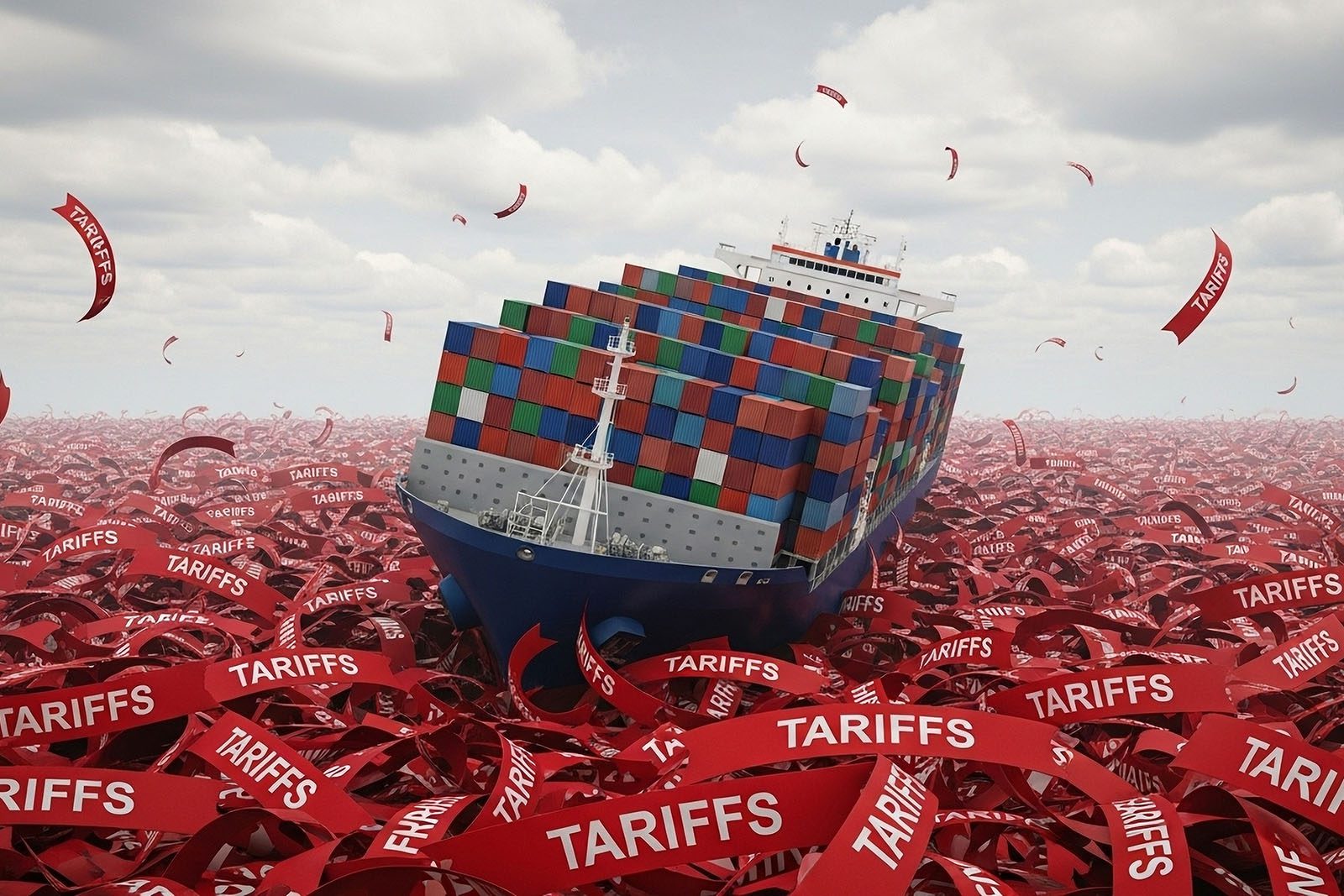


New Section 301 Forced Labor Tariffs
On July 23, 2026, the Office of the U.S. Trade Representative (USTR) announced final action under Section 301, imposing new forced labor-related tariffs on imports from 60 economies. The tariffs generally apply to covered merchandise entered for consumption, or withdrawn from warehouse for consumption, on or after 12:01 a.m. ET on July 24, 2026.
Depending on the country of origin and applicable MFN duty rate, the additional duty will generally result in a 10% or 12.5% duty burden unless an exemption applies.
Who is Affected and What are the Key Tariff Rates?
10% rate:
Applies to imports from certain economies that have adopted, committed to adopt, or partially implemented forced labor import prohibitions, including:
- Argentina
- Guatemala
- Mexico
- Bangladesh
- Honduras
- Pakistan
- Cambodia
- India
- Sri Lanka
- Canada
- Indonesia
- Trinidad
- Ecuador
- Jordan
- Tobago
- El Salvador
- Malaysia
- United Kingdom
10% or 12.5% net-of-MFN approach:
Applies to certain goods from the following countries, where additional Section 301 duties are imposed only as needed to reach the applicable flat rate:
- European Union
- Taiwan
- Japan
- South Korea
- Switzerland
12.5% rate:
Applies to covered imports from the remaining investigated economies unless a product, program, or country-specific exemption applies.
Highlighted Exemptions and Carve-Outs
- In-transit goods: Goods loaded onto a vessel at the port of loading and in transit on the final mode of transit before 12:01 a.m. ET on July 24, 2026, may be exempt if entered for consumption or withdrawn from warehouse for consumption before 12:01 a.m. ET on July 28, 2026.
- USMCA-originating goods: Goods from Canada or Mexico that qualify for duty-free treatment under the United States-Mexico-Canada Agreement (USMCA) are exempt from the new additional duties.
- Existing Section 232 articles: Goods subject to completed Section 232 investigations, including certain steel, aluminum, copper, vehicle, wood, and semiconductor articles, are exempt from the new Section 301 forced labor tariffs.
- Chapter 98 entries: Certain Chapter 98 entries are exempt, subject to important exceptions for specified 9802 provisions.
- Civil aircraft and related articles: Qualifying civil aircraft, aircraft engines, parts, components, subassemblies, and ground flight simulators are exempt.
- Pharmaceutical-related products: Certain chemicals, ingredients, compounds, and other products are exempt when used in pharmaceutical applications.
- Humanitarian donations and informational materials: Donations intended to relieve human suffering and qualifying informational materials are exempt.
- Product-specific and country-specific carve-outs: Annex II includes broad global product exemptions, as well as additional carve-outs for Argentina, Bangladesh, Cambodia, Ecuador, El Salvador, the European Union, Guatemala, Indonesia, Jordan, Malaysia, Switzerland, Taiwan, and the United Kingdom.
- Textiles and apparel carve-outs: Certain Jordan-origin goods and CAFTA-compliant goods from El Salvador or Guatemala may qualify for exemptions. USTR also indicated that future tariff-rate quotas may be established for garments or textile goods from Bangladesh, Cambodia, Indonesia, and Malaysia.
Practical Compliance Considerations for Importers
- Review country of origin, Harmonized Tariff Schedule (HTS) classification, and applicable Chapter 99 reporting requirements promptly for entries from covered economies.
- Do not assume that a product is exempt based solely on product type or sourcing history. Exemption eligibility depends on the specific HTS provision, Chapter 99 heading, country of origin, and entry timing.
- Update broker instructions to reflect the new Section 301 duty framework, including the proper sequencing of Chapter 98 and Chapter 99 tariff provisions.
- Preserve documentation supporting any claimed exemption, including USMCA qualification, in-transit status, Section 232 coverage, pharmaceutical use, or country-specific carve-out eligibility.
What Should Importers Do Now?
The new Section 301 forced labor tariff action is broad and effective immediately, but it includes significant exemptions that may help reduce or remove duty exposure for qualifying imports. Conducting a product-by-product review before entry can help importers determine whether the new duties apply and whether any global, country-specific, program-based, or timing-based exemption is available.
Connect with your Aprio advisor for help with assessing which entries are covered, identifying the exemptions you may be able to claim, and updating your filing and broker instructions before duty apply.