

Summary: If you’re currently planning your 2026 budget, you have probably noticed that fertilizer costs have moved 40% since last fall, diesel prices have nearly doubled, and softer commodity markets at the other end of the year. Labour, fuel, feed, equipment, freight, and financing costs are adding a significant challenge. With Canadian farmers expected to spend nearly $10 billion on fertilizer this year, early procurement, cash-flow, tax, and risk planning are critical to protecting profitability.
The 2026 Input Cost Squeeze: What Canadian Farmers are Facing
In early April, Manitoba farmers reported diesel prices jumping from $0.80 to $1.51 per litre. In Atlantic Canada, the Atlantic Grains Council reported that some fertilizer retailers stopped giving price quotes altogether, unable to keep up with global supply volatility. These are not isolated incidents but signs of a structural shift in the economics of Canadian farm production.
According to Farm Credit Canada, you and your peers across Canada could spend about $22.5 billion on farm inputs in 2026, a level that would surpass the 2022 record of $21.8 billion. Fertilizer alone is forecasted to reach $10 billion, with prices up by as much as 40%.
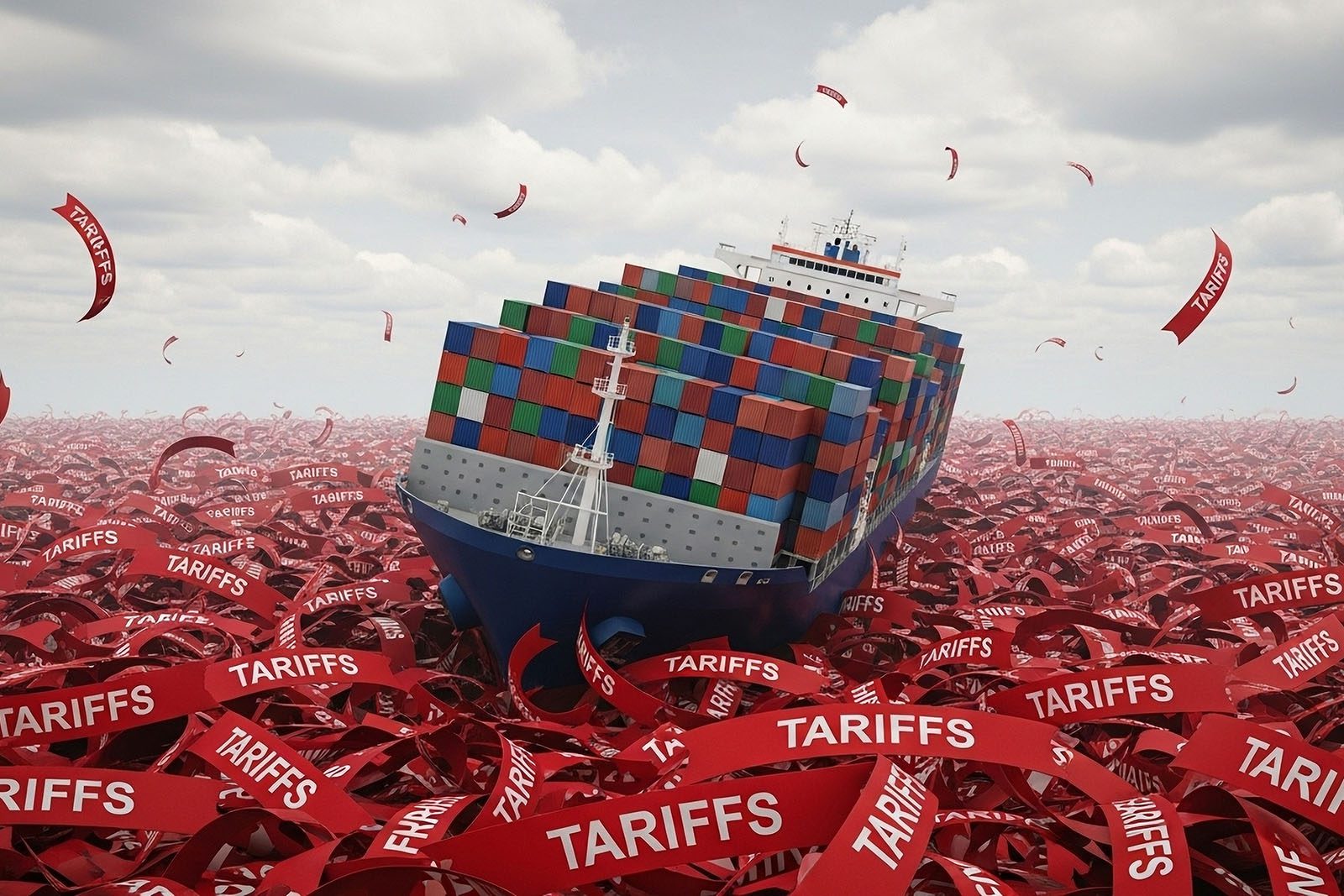
These pressures are driven by disruptions around the Strait of Hormuz, which carries about 35% of global crude oil flows and up to 30% of internationally traded fertilizers, a proportion that runs higher for urea specifically, and by United States tariffs on Russian and Belarusian fertilizer, which have further tightened supply.
The squeeze runs both ways. While your input costs are climbing, commodity prices are softening, leaving margins compressed from both ends. This is no longer a temporary blip to wait out. It’s a planning challenge that touches your input timing, liquidity, crop mix, and tax position, and it should be addressed before major commitments are made.
Fertilizer: Your Biggest Line Item and How You Can Manage It
Fertilizer remains the largest and most immediate input cost pressure for most Canadian crop producers, accounting for roughly 16% to 28% of total farm expenses, according to a 2025 peer-reviewed study of cropping systems in Western Canada published in the Canadian Journal of Plant Science.
The pressure is sharpest in nitrogen, which drives costs for high-input crops like corn, wheat, and canola. When nitrogen fertilizer prices rise, as they did in 2026, the impact cascades into application-rate decisions, yield targets, and working capital.
Potash carries a different risk profile. Canada is one of the largest potash producers, particularly in Saskatchewan, with approximately 1.1 billion tonnes of measured reserves equivalent to potassium oxide. But domestic supply strength doesn’t fully shield Canadian farmers from elevated potash prices, export demand, or freight volatility.
A few practical moves can help you manage fertilizer prices in 2026:
- Lock in prices where you can: Farmers who pre-purchased or forward-contracted last fall saved significantly when prices spiked this spring. If your cash flow and storage allow it, forward contracting some portion of your 2026 fertilizer is one of the most direct hedges available.
- Use precision tools to cut waste: Manitoba Agriculture’s 4R Fertilizer Profitability Calculator helps you assess the financial benefits of improved fertilizer management. Using field-specific soil test data and science-based analysis, the tool compares fertilizer plans based on cost per acre, net profit per acre, greenhouse gas efficiency, maximum profitability, and yield potential.
- Pair technology with agronomic discipline: Soil testing, variable-rate application, split applications, banding, and the 4R Nutrient Stewardship framework can help you target nutrients where they generate the strongest economic return. The goal isn’t to use less; it’s to waste less.
- Use fertilizer-to-crop price ratios to guide decisions: The ratio compares fertilizer costs to expected crop revenue. A higher ratio means fertilizer is more expensive relative to crop value, which can affect nitrogen rates, crop selection, yield targets, and the economics of marginal acres. A lower ratio gives you more flexibility in application decisions.
Labour, Equipment, Feed, and Fuel are Adding to the Cost Pressure
Beyond fertilizer, costs are climbing across the wider operating base of Canadian farms. In particular, labour is becoming a sharper pressure point.
Rural communities are still facing acute labour shortages, according to Employment and Social Development Canada’s March 2026 update. The federal minimum wage rose to $18.15 per hour on April 1, a 21% cumulative increase since the standalone federal minimum was introduced in 2021. Recent changes to the Temporary Foreign Worker Program have also tightened access for some operations. If you rely on seasonal labour, it’s worth reviewing your hiring plan early and factoring broader wage pressure into your 2026 budget.
Three other cost areas deserve your close attention:
- Tie equipment decisions to cash flow and tax planning: If you’re developing or testing innovative farming technology — including automation, sensor integration, data-driven production tools, or precision application systems — your work may qualify under the Scientific Research and Experimental Development (SR&ED) tax incentive program. SR&ED isn’t a general equipment incentive, but it can apply where you’re working through scientific or technological uncertainty.
- Feed costs are transferring crop pressure to livestock margins: Higher crop production costs flow through feed grain, hay, protein meal, and imported supplement markets, putting pressure on livestock, dairy, and poultry operations. In the poultry industry, feed can account for 60 to 70% of production expenses.
- Fuel volatility hits nearly every operating line: With energy prices elevated following the Strait of Hormuz disruption, your fuel exposure should be modelled across the full operation, not treated as a single line item. Some producers are turning to aerial spraying, drone-based application, or other custom application options when labour shortages, wet fields, or tight application windows make ground application less efficient.
Financial Strategies to Protect Farm Margins
As input costs rise, your margin protection depends on how well you connect production decisions with cash flow, tax planning, and risk management. The goal isn’t only to reduce expenses, it’s to protect yield potential, liquidity, and long-term profitability.
- Lead with precision agriculture: Precision agriculture is one of the highest-leverage cost management tools available right now. Variable-rate technology, GPS-guided application, and drone-based crop monitoring can reduce your input waste by 10% to 15%. The investment pays back fastest when input prices are high, which is exactly the environment you’re in.
- Reassess crop rotation and lower-input options: Crop rotation can help manage fertilizer exposure, improve soil health, reduce pest and disease pressure, and diversify revenue. Where the market supports it, lower-input crops like pulses can help reduce reliance on synthetic nitrogen because they fix their own. Any shift should still factor in contracts, storage, yield history, soil conditions, market access, and disease pressure.
- Strengthen farm cash flow management: Input purchases, labour, fuel, feed, equipment repairs, and debt servicing create cash flow gaps before revenue comes in. Working with your financial advisor to review operating lines, supplier terms, repayment schedules, and the timing of major purchases helps maintain liquidity throughout the season.
- Use tax planning to support liquidity: Allowable farm expenses — including seed, feed, sprays, fertilizers, fuel, and repairs — reduce taxable farm income when properly documented. Capital cost allowance timing and the accelerated investment incentive matter too, especially when you’re making a major equipment purchase. SR&ED may also be relevant where you’re developing or testing innovative technology to resolve scientific or technological uncertainty.
- Coordinate insurance and risk-management tools: Crop insurance, forward contracts, AgriStability, AgriInvest, and margin-protection tools can help manage production, price, and income risk. AgriStability is a margin-based program that provides support when you experience larger income losses, while AgriInvest helps you manage smaller income declines and make investments to manage risk.
Planning Ahead: What to Watch for in 2027
A few variables will shape the fertilizer price forecast for 2026 and the outlook into 2027:
- The Strait of Hormuz: A ceasefire would ease energy and fertilizer pricing, but supply chains take months to recover, so quick relief is unlikely.
- S. tariff policy on Russian fertilizer: This is still a wildcard; either direction will move global prices materially.
- Domestic potash capacity: Continued investment in Canadian potash production could ease phosphate pressure modestly over the medium term.
- Commodity prices: If crop prices keep softening while inputs stay elevated, your 2027 margin math will look tighter than 2026.
Planning for 2027 needs to start now, not at harvest. The farms that come out of this stronger will be the ones treating 2026 as a structural inflection point, not a passing storm.
Final Thoughts: Reassess Input Costs Before They Strain Profitability
The 2026 input cost squeeze isn’t only a fertilizer issue. It is a whole-farm financial planning challenge that affects cash flow, financing, crop mix, tax planning, procurement, equipment decisions, and risk management.
If you wait until year-end, you’ll have fewer options to protect margins or capture available tax opportunities. Reassess fertilizer exposure, input timing, working capital, operating lines, deductible expenses, capital cost allowance timing, SR&ED potential, and 2027 budgets before major cost commitments are made.
In this environment, profitability won’t depend only on strong production decisions. It depends just as much on disciplined financial planning, timely procurement, and a clear view of how rising costs affect the full farm business.