
Summary: The Supreme Court ruled that President Trump lacked authority under IEEPA to impose tariffs, stating only Congress can levy duties. The 6-3 decision invalidated Trump’s tariffs and left American businesses facing refund uncertainty and a volatile regulatory environment. New tariffs under Section 122 have sparked further legal questions, and the path forward for trade policy and refunds remains unclear.
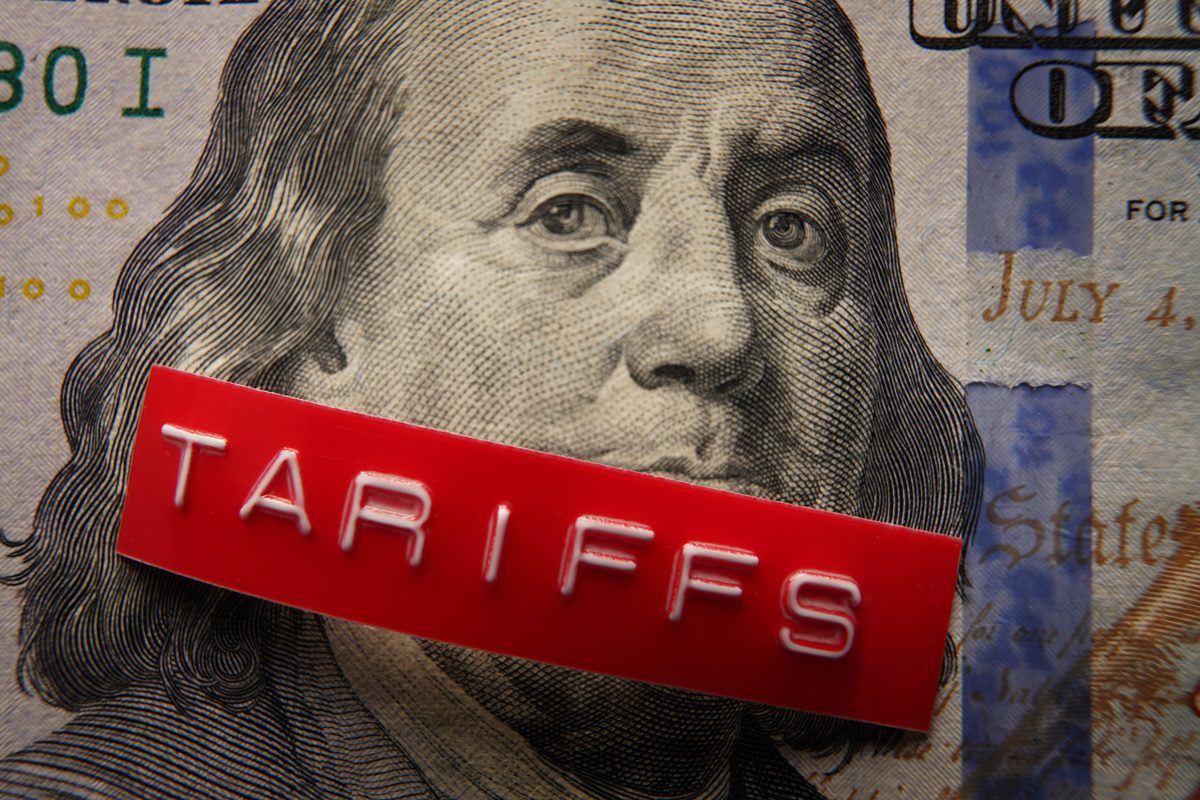
Shortly after taking office, President Trump identified two foreign policy concerns: the influx of illegal drugs from Canada, Mexico, and China, and the growing U.S. trade deficits. Viewing the drug influx as a public health crisis, and the trade deficits as a threat to American manufacturing and critical supply chains, the President declared a national emergency and invoked the International Emergency Economic Powers Act (IEEPA) to justify sweeping tariffs. These included a 25% duty on most Canadian and Mexican imports, and a 10% duty on most Chinese imports, and a series of reciprocal tariffs of at least 10% on all trading partners, with many nations facing higher rates.
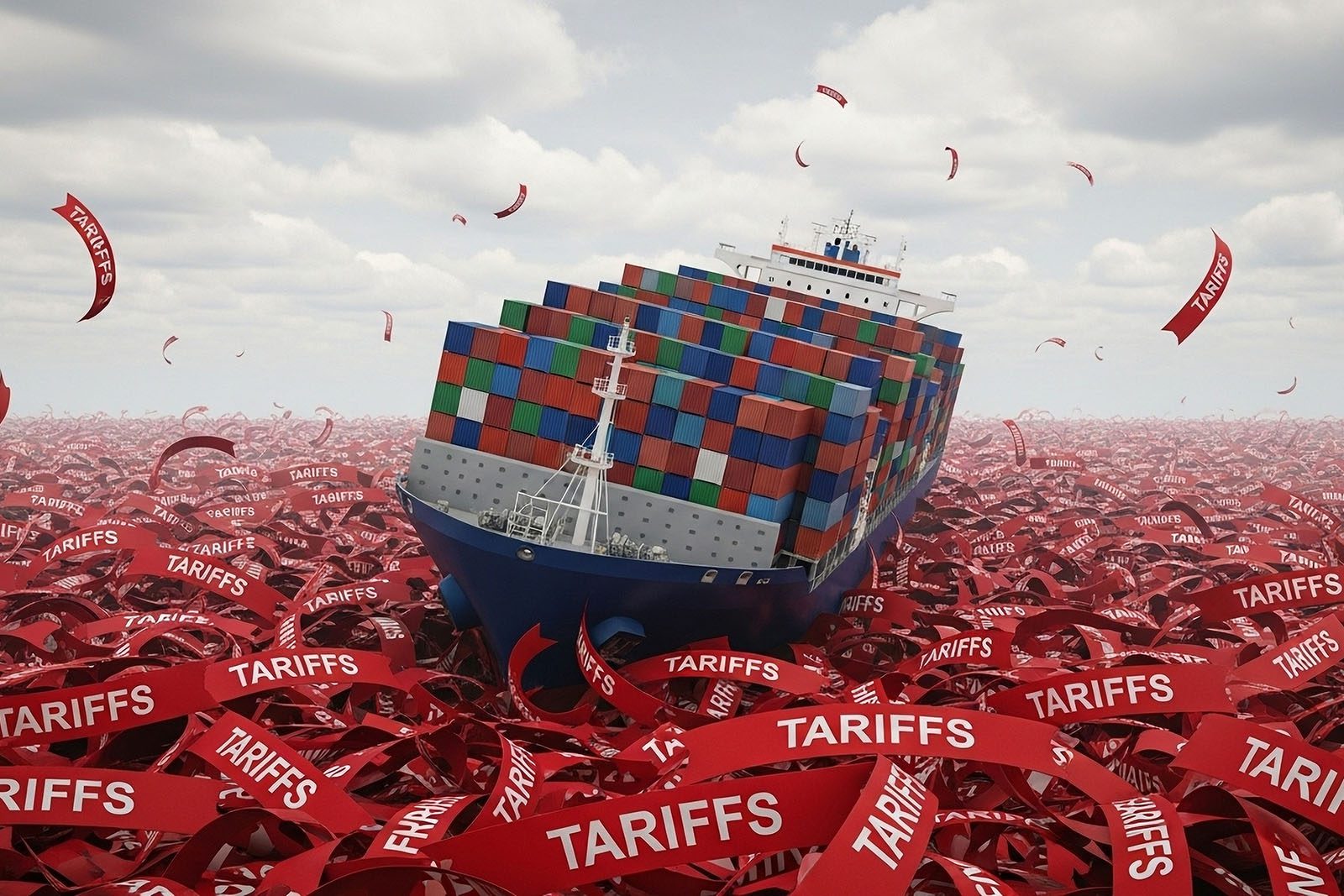
The President’s tariff policy has been consistently modified with increases, reductions, and exemptions that alter the scope of goods that tariffs are levied on. The rapid and unpredictable changes to the imposed tariffs have left many businesses struggling to plan for the future, as they face significant challenges in estimating costs and budgeting operations amid constant regulatory shifts.
Legal Implications of Trump’s Tariffs
Two lawsuits emerged in response:
- Learning Resources in the United States District Court for the District of Columbia, No. 24-1287. In Learning Resources, the court denied the governments motion to transfer the case to the CIT and granted the plaintiffs’ motion for a preliminary injunction, concluding that IEEPA did not grant the President the power to impose such tariffs.
- O.S. Selections in the United States Court of International Trade (CIT), No. 25-250. In V.O.S. Selections, the CIT granted summary judgement for the plaintiffs, and the Federal Circuit concluded that IEEPA’s power to “regulate…importation” was insufficient to justify tariffs which “are unbounded in scope, amount, and duration.”
Both plaintiffs alleged that the IEEPA does not authorize the President to impose either the reciprocal or drug trafficking tariffs. Due to the similar nature of their claims the Supreme Court of the United States (SCOTUS) consolidated the two cases when agreeing to hear the case.
The SCOTUS Ruling Explained
In a decisive 6-3 opinion, SCOTUS ruled in favor of the plaintiffs, stating that “IEEPA does not authorize the President to impose tariffs.” The Court anchored its reasoning in Article I, Section 8, of the Constitution, which specifies that “Congress shall have power to lay and collect Taxes, Duties, Imposts and Excises,” making it clear that the drafters of the Constitution did not vest any part of the taxing power in the Executive Branch, thus leaving the taxing power to Congress alone.
The Government’s Argument
The government conceded that the President possesses no inherent authority to impose tariffs during peacetime but instead reading the words “regulate” and “importation” presented in IEEPA granted the President the power to impose tariffs in a presidentially declared emergency without limit. Chief Justice Roberts, joined by Justices Gorsuch, Barrett, Sotomayor, Jackson, and Kagan found no merit in the government’s argument.
Major Questions Doctrine Debate
The only disagreement among these justices was over whether the “major questions doctrine” applied. This doctrine requires clear congressional authorization for executive claims of extraordinary powers. In cases involving “major questions,” the Court has held that “both separation of powers principles and a practical understanding of legislative intent” suggest Congress would not have delegated “highly consequential power” through ambiguous language.
Justices Roberts, Gorsuch, and Barret agreed that “there is no exception to the major questions doctrine for emergency statutes.” They also addressed and refuted the dissent’s argument that, because tariffs implicate foreign affairs, the “major questions doctrine” does not apply. While Justices Sotomayor, Jackson, and Kagan agreed that the tariffs were unconstitutional but stated that common tools of statutory construction were sufficient and that the “major questions doctrine” was inapplicable.
Despite these differences, all six justices agreed that Congress has historically treated the powers to regulate and to tax separately and has always mentioned them expressly. The fact that tariffs are a matter of foreign commerce, “does not make it any more likely that Congress would relinquish its tariff power through vague language, or without careful limits.” Accordingly, the Justices found that the President failed to identify “clear congressional authorization to justify his extraordinary assertion of that power.”
The Aftermath: New Tariffs and Lingering Questions
Shortly after the SCOTUS ruling was released, President Trump signed an Executive Order to impose another round of tariffs under Section 122 of the 1974 Trade Act, which allows temporary tariffs of up to 15% for 150 days as a means to mitigate international trade imbalances. Among the requirements of Section 122 are a “large and serious” balance of payments deficits. However, a balance of payments deficit is not a trade deficit, and it remains unclear whether the statutory requirements of Section 122 have been met. Thus, this ambiguity sets the stage for future litigation challenging the legitimacy of the new tariffs.
Refunds: The Elephant in the Room
A pressing issue remains—now that the tariffs have been ruled to be illegal, what happens to the billions collected by the Department of Homeland Security through Customs and Border Protection?
Currently, these funds are held by the Department of the Treasury, but the Supreme Court’s procedural approach prevents lower courts from issuing blanket refund instructions. This leaves the process in the hands of the Treasury and/or Homeland Security, who may follow established refund procedures. However, the President has indicated that his preference for those seeking a refund is to pursue litigation in the Court of International trade to recovery their money. Given the Court’s limited resources and size compared to the federal district court system, it could take years of legal battles for affected companies to resolve.
Final Thoughts: Navigating Uncertainty in American Trade
As of now, the only certainty for American businesses is that the Supreme Court has determined, by a 6-3 ruling, that the tariff’s imposed at the start of President Trump’s term are unlawful. However, the process for claiming, deciding on, and issuing refunds remains unclear, as is the legality of the new round of tariff’s the President announced after the SCOTUS ruling.
For American businesses and trading partners, uncertainty reigns: the regulatory landscape remains volatile, and planning for the future is filled with risk. Until these issues are resolved, a prolonged climate of unpredictability will continue to loom over U.S. trade policy and the global marketplace, at least for the foreseeable future.