

Summary: Headline stability is masking real economic strain. While GDP figures and steady inflation look positive, soft domestic demand and weakening household spending tell a different story. We’ll explore the pressures shaping Canada’s industrial outlook, from U.S. tariff risks to new domestic policies, and offer clear guidance for investors navigating this complex environment.
Confusing Signals for Investors
If you’re an investor looking at economic signals emerging from Canada, you can be forgiven for being confused. While headline indicators show stability, underlying details show something far more fragile, and the gap between these two narratives is now the central story of the Canadian economy.
It has become critical to extrapolate insights beyond the headline data to arrive at a successful strategy for investing. Let’s take a look at how the economy is shaping up at the periphery and at the core.
Following its December policy meeting, the Bank of Canada held its key rate at 2.25%, noting that the economy has absorbed trade shocks with more resilience than anticipated. Governor Tiff Macklem described the current stance as appropriate for supporting a structural transition while keeping inflation anchored. However, he did acknowledge that uncertainty remains high and the bank is prepared to act if the outlook shifts.
Revised GDP figures for the previous fiscal year point to stronger productive capacity than previously assumed. Inflation sits slightly above the target range but has begun to ease, with core measures approaching three percent.
On paper, the economy looks steady. But for many Canadians, that’s not what they’re feeling. A recent Angus Reid Institute survey found that the cost of living dominates household anxiety, with nearly four in ten people struggling to manage grocery bills. The Bank’s priority is to keep inflation on target while supporting long-term wage growth, but that trajectory feels distant for many households.
GDP Data Masks Underlying Weakness
The pressure is even more evident when you dig into industry data. Third-quarter GDP came in at 2.6% year-on-year, beating expectations by a wide margin. A sharp drop in imports created a statistical lift that masked a decline in domestic demand. Business investment stayed flat, household spending slipped, and exports barely recovered from a steep fall earlier in the year.
Economists are sounding the alarm. Oxford Economics noted the headline number was “flattered” by a 2.2% drop in imports. Royce Mendes of Desjardins said the economy is “running on fumes,” pointing to a 0.1% fall in household spending. The data suggests an economy running close to stall speed, struggling under the weight of U.S. tariffs and ongoing policy uncertainty.
Tariff Risk Reshapes Canada’s Industrial Outlook
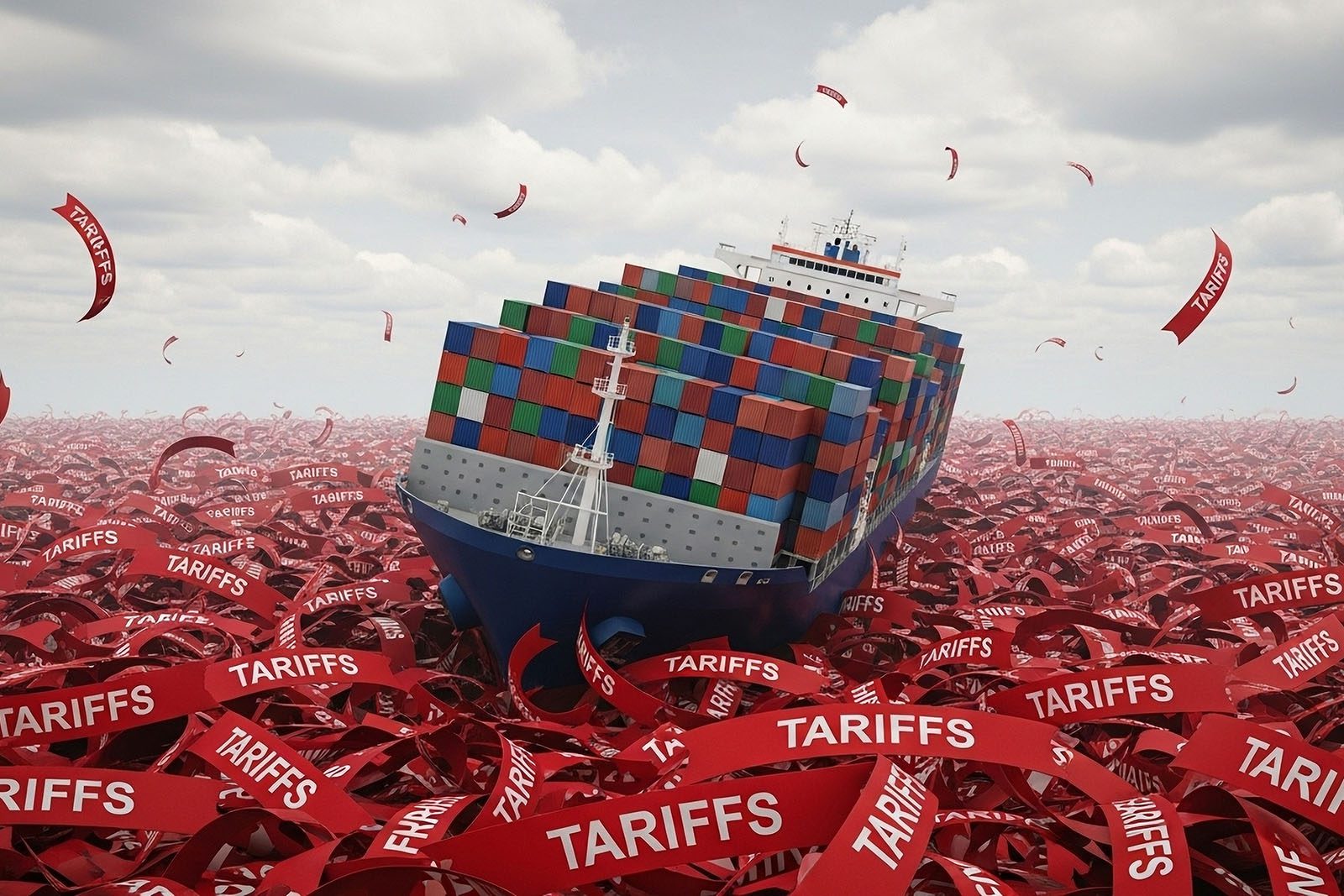
The threat of U.S. tariffs strike directly at the heart of Canada’s industrial base, hitting sectors like steel, auto, aluminum and lumber. With the renewal of the Canada-U.S.-Mexico Agreement (CUSMA) still unsettled, many firms are delaying expansion plans or even considering relocation.
In response, the Canadian government is widening its diplomatic and trade map. After a period of tension, it is re-engaging with India, aiming to double bilateral trade by 2030. Canada has also resumed high-level discussions with China for the first time in eight years. While not turning away from the U.S., Canada is clearly searching for options in a trading environment where relying on a single market no longer feels safe.
Domestic policy is also shifting. Budget 2025 introduced major investments in infrastructure, digital corridors, and energy systems, aiming to unlock a trillion dollars in private investment. To create fiscal room, the government also plans to cut operational spending by C$60 billion over five years.
Building an Industrial Strategy Around Competitiveness
Industries exposed to trade pressure are set to receive targeted support. The government plans to deploy C$5 billion over five years to assist sectors hit by U.S. tariffs, including a C$10 billion loan facility for firms facing cash flow disruptions. It has also implemented a ‘Buy Canadian’ policy, which according to the release, “fundamentally changes how the federal government purchases goods and services,…making Canada its own best customer.”
This pivot is visible in other key sectors:
- Energy: The government is investing in clean energy, including small nuclear reactors, low-carbon liquefied natural gas (LNG), and carbon capture systems. The focus is on system-level incentives to drive emissions reductions.
- Defence: In one of the largest defence spending commitments in decades, Canada plans to meet its NATO spending target this year and push toward 5% of GDP by 2035. This includes funding for local supply chains and Arctic readiness.
These changes represent a clear break from the past. The capital gains tax increase has been cancelled, electric vehicle sales mandates have been delayed, and ineffective programs have been discontinued. The new policy environment prioritizes competitiveness and resilience.
What This Means for Investors
If you’re an investor, for you this means that Canada is not in free fall. But it’s not in a boom either. It’s navigating a period where headline numbers and daily experiences diverge. Growth looks intact when measured from a distance, but at ground level, demand is soft, confidence remains uneven. The government’s policy response is ambitious, but its success depends on execution and a stable external environment.
How Aprio Can Help
This mix of strength and vulnerability requires careful interpretation. Global investors need clarity on which trends are cyclical, which are structural and which are political. That distinction is crucial for allocating capital in a climate where trade patterns can shift quickly.
Aprio supports clients operating in this complexity. If you are evaluating risk or recalibrating your business strategy, we can help you make informed decisions rooted in real data and analysis.
Learn more at Aprio.com.