


Summary: Trade negotiations impact investment decisions for small and mid-sized Canadian businesses. While Canada saw a 2025 with uncertainty around international trade agreements and tariffs, Canadian businesses can still appeal to investors with smart diversification and strong positioning. In this article, Aprio looks at how trade negotiations influence investment, and how business leaders can navigate trade uncertainty while keeping an appealing profile.
Trade plays a central role in competitiveness and growth. While trade agreements are often confined to the export and tariff lens, their impacts extend further. While uncertain periods can cause businesses to delay or scale back investment, it is necessary for long-term growth, and needn’t hold back companies that position themselves to accommodate that uncertainty.
Why Trade Negotiations Matter for Investment Planning
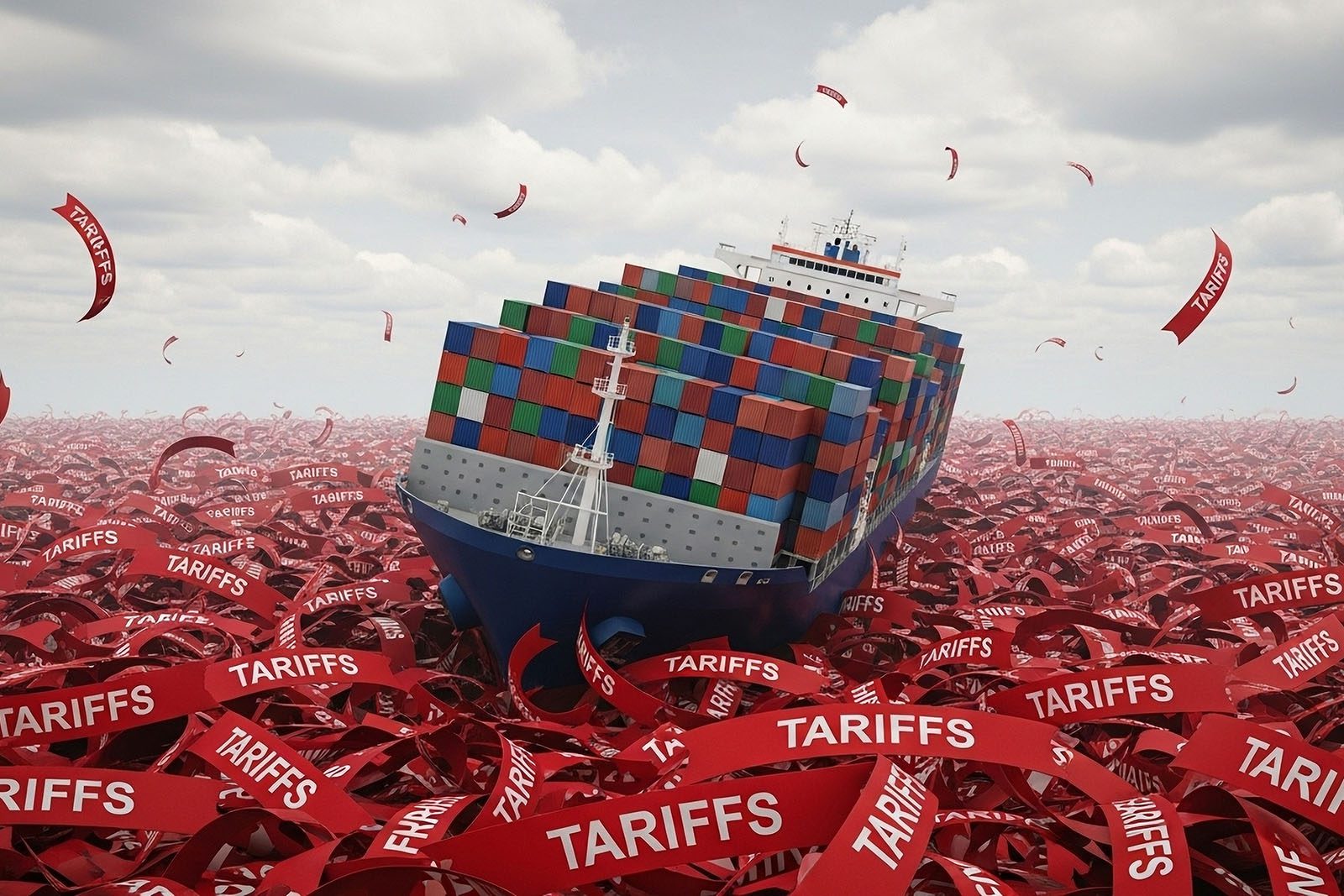
When trade negotiations are in flux, or the outcomes and direction are subject to fast shifts, investment risk increases. This makes 2025 particularly impactful for future planning. Last year, we saw:
- Ongoing reviews of core trade agreements, with the Canada-United States-Mexico Agreement due for renegotiation in 2026.
- Shifting tariffs and trade patterns with one of Canada’s major trade partners, the United States
- Rising costs and non-tariff barriers for major trading partners and Canada, which impact investment decisions
- Increasing use of trade policy as an economic and geopolitical tool globally
- A new focus on supply chains, in particular a shift to diversification of sourcing
- Changing origin rules and compliance regulations
However, without regular, well-targeted investment, it is impossible for a business to grow. This means these shifts should be framed not as whether to invest, but when and where for the best possible returns.
Investment Uncertainty and the “Wait and See” Effect
When trade negotiation or renegotiation is on the table, businesses often delay investment. They wait for more clarity, or to see the end result before taking a risk. It’s an understandable risk position, particularly for small and mid-sized companies with lean budgets.
However, this hesitation can affect:
- Capital expenditure, reducing new facility or equipment investment or chasing the “next big solution” in an industry
- Expansion into export-dependent product lines or new markets
- Long-term supply contracts and longer standing agreements
- Cross-border mergers, acquisitions, or partnerships as trade uncertainty impacts their value
As an example, Ontario, followed by Quebec and Alberta, contribute to the bulk of Canada’s manufacturing. Historically, the Canadian manufacturing industry has had tight cross-border supply chains and markets shared with the United States as their second-largest trade partner.
However, with the recent U.S. administration change and the rise of steep U.S. tariffs on core industries, such as automotive parts and products, aluminium, and even lumber, trade negotiation uncertainty will slow investment, even when a business’s operating fundamentals are attractive.
Some Recent Canadian Trade Shifts
In response, we’ve seen a (relatively rapid) diversification of trade partnerships in Canada. For example, Ottawa formalized a free trade agreement with Indonesia in September 2025, and further expansions, both nationally and at the provincial level, into the entire Association of Southeast Asian Nations (ASEAN) territories are looking increasingly appealing.
Canada has also recently expanded their air services pact with the United Arab Emirates, and is attempting to fast-track a stalled free trade agreement with India. This comes at a time when the disruptions of the global pandemic are also reshaping supply chains, with more businesses looking to “China + 1” strategies instead of remaining entirely dependent on Chinese exports.
This level of uncertainty and changes in trade negotiations and partners can vastly impact individual businesses and their investment decisions.
Sector-Specific Sensitivities
Trade negotiation impacts sectors differently. An accounting firm in Ontario, reliant mostly on local business, will see a lesser (but not necessarily absent) impact than an Ontario automotive manufacturer reliant on U.S. markets. In Canada, investment sensitivity is often highest in sectors with:
- High export exposure, such as manufacturing, automotive, agricultural, food and beverage, and resource-based industries, as changes in tariffs or rules of origin can impact cost structures and competitiveness.
- Capital intensive operations, where upfront capital is in high demand, such as advanced manufacturing and processing, and there’s less flexibility once investments are made.
- Regulation-heavy sectors, where there are high mutual regulatory standards over borders, adding complexity in trade negotiations anyway, which can be intensified by complex climates.
Of course, this doesn’t mean sectors without these added complexities are unaffected, but they will typically see less of an impact.
Supply Chain Investment Impacts
It’s also important to remember that trade shifts impact the supply side as well as the demand side. Trade negotiations impact where businesses invest, not just how much they invest. When trade is uncertain, businesses revisit their supply chain strategies alongside capital allocation, with common responses including:
- Increasing domestic suppliers and production capabilities to reduce cross-border risks
- Diversifying suppliers over different countries, as we see with China + 1
- Rethinking logistics and warehousing routes, or bringing in inventory buffering practices
- Prioritizing flexibility and delivery over maximum efficiency or cost-effectiveness
These are strong strategies for more supply chain resilience, but they demand investment and careful financial planning, and must stay flexible.
What Trade Uncertainty Demands from Investment Decisions
Individual businesses can often do little but adapt to changed trade conditions, but what remains key in investment decisions is confidence. When policy uncertainty is higher, firms can respond by reducing their perceived risk and meeting heightened investor demands for:
- Thoughtful scenario planning
- Increased scrutiny of export-dependent investments
- Higher capital rates and shorter payback periods to reduce risk exposure
When capital investment is cautious, showing the strong fundamentals to support reasonable risk is essential.
Implications for Small and Mid-Sized Businesses
While large or multinational firms often have the resources to absorb some of the trade-related uncertainties through diversification and scaling, it is inevitably tougher for smaller businesses and leaner entities, who may face:
- Limited access to financing, or difficult rate and payback timelines
- Increased borrowing costs due to perceived risks
- Reluctance to expand new markets
- Less resources to pivot as changes require
This urges a shift to incremental, well-planned investment. Balancing risk management and growth goals is key. Businesses can use some (or all) of the following strategies to help achieve that balance:
- Think Flexibly: Modular investment approaches let investments scale up (or down) as trade conditions demand.
- Diversify Where Possible: New supply chains, markets, and even revenue options can offer a buffer against single-source dependence.
- Strengthen Compliance and Planning: Bringing in or developing trade expertise, as well as leaning on compliance systems, help businesses respond more quickly to change and reduce investment risk accordingly.
- Align Capital and Scenarios: Modelling multiple trade outcomes can assist in surfacing impacts to returns and cash flow, fortifying investor confidence.
- Seek Support: Both federal and provincial supports are available to lean on, with programs to help foster investment suitability and growth. For one example, Quebec offers market diversification resources that could support local businesses. Third-party support with trade expertise can also help you create the most attractive investment profiles possible.
Trade Negotiations Increase Uncertainty, But Strategy Reduces It
Uncertainties in trade negotiations can play a significant role in shaping business investment. While 2025 brought some new uncertainties to the table, it shouldn’t hold decision-making back. It simply requires adaptation to that uncertainty.
If you are evaluating how trade negotiations could impact your future investment plans, Aprio supports small and mid-sized Canadian businesses in navigating trade-related uncertainty, and we are always here to help. Schedule a consultation with our team today.