








What we are seeing in technology
AI is redirecting technology investments and reshaping the industry’s workforce. Infrastructure continues to attract a growing share of spending, while venture capital is flowing into fewer, far larger deals. After declining for two years, AI compute costs are rising again. At the same time, demand for software developers is quietly returning, even as layoffs climb and companies point to AI as the reason. Together, these trends offer a clearer view of where technology dollars are going and what businesses are getting in return.
1. AI-related spending is reshaping the IT budget
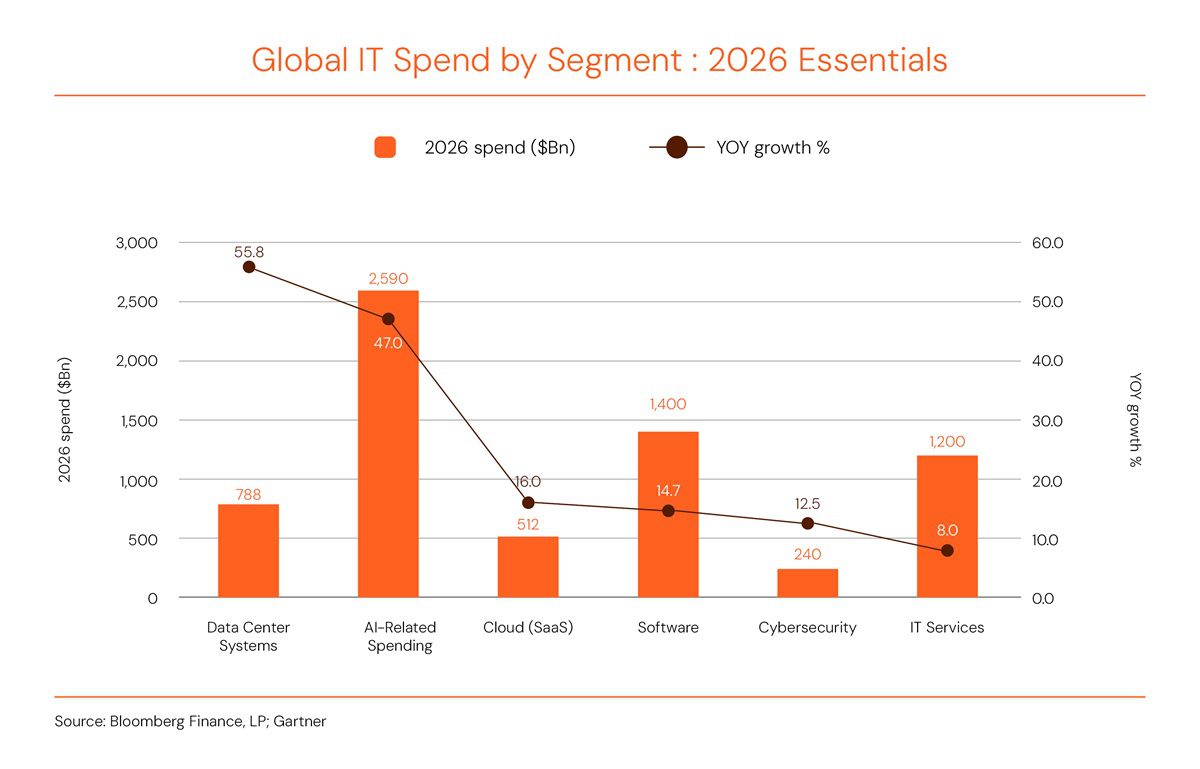
Global IT spending estimates for 2026 put AI-related spending at $2.6 trillion, growing 47% year over year. Data center systems are the fastest-growing segment, up 56% on $788 billion of spend. However, more established categories are growing at a much slower pace: cloud software at 16.0%, software at 14.7%, cybersecurity at 12.5%, and IT services at 8.0%. Because AI-related spending spans several of these categories rather than sitting beside them, the segment totals should not be added together.
What this means for you: The strongest growth is happening in the infrastructure that powers AI, not in the software most businesses buy. As traditional vendors face a slower market and compete harder to protect renewals, buyers may have more room to negotiate. If you sell into IT budgets, expect every line to compete against AI for the same dollars.
2. Layoffs are rising, and companies are pointing to AI
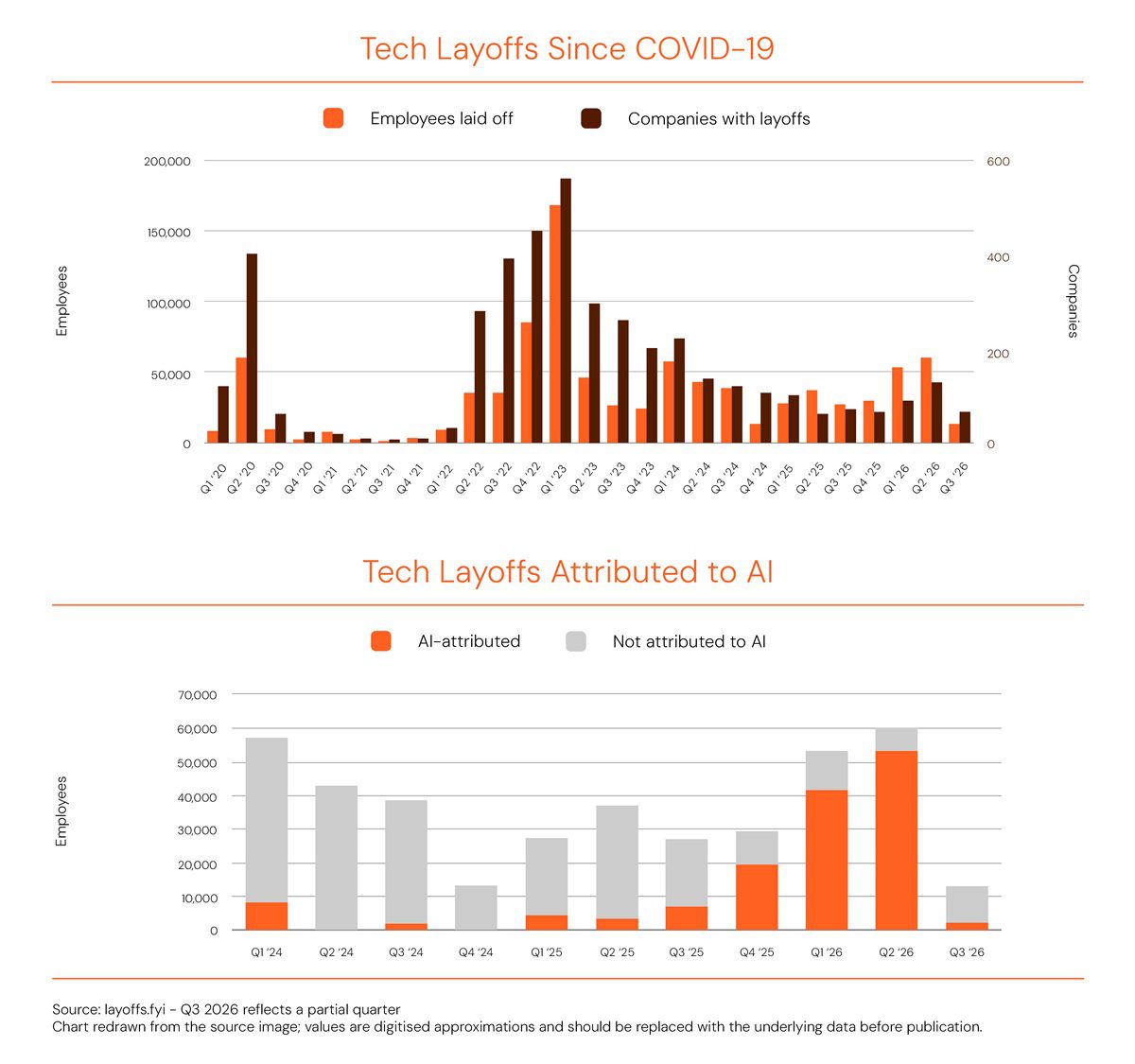
Tech layoffs increased through the first half of 2026, affecting roughly 53,000 employees in the first quarter and 60,000 in the second quarter. These are the highest quarterly totals since early 2023. Yet the number of companies announcing cuts remains well below the 2022–2023 peak, suggesting fewer employers are making larger reductions. The reason for the layoffs has also shifted: AI-attributed layoffs accounted for nearly 88% of second-quarter cuts, up from roughly 17% in the first quarter of 2025. Third-quarter figures reflect only part of the quarter and are not yet comparable.
What this means for you: AI has moved beyond hiring plans and is now being cited as a reason for cutting headcount, a shift that boards and lenders will likely question. Before restructuring around the technology, document what it can reliably handle today and where humans still need to review its work. There may also be an upside: these cuts are bringing experienced technology talent back into the market, creating an opening for businesses outside the tech sector.
3. Demand for software developers is growing again
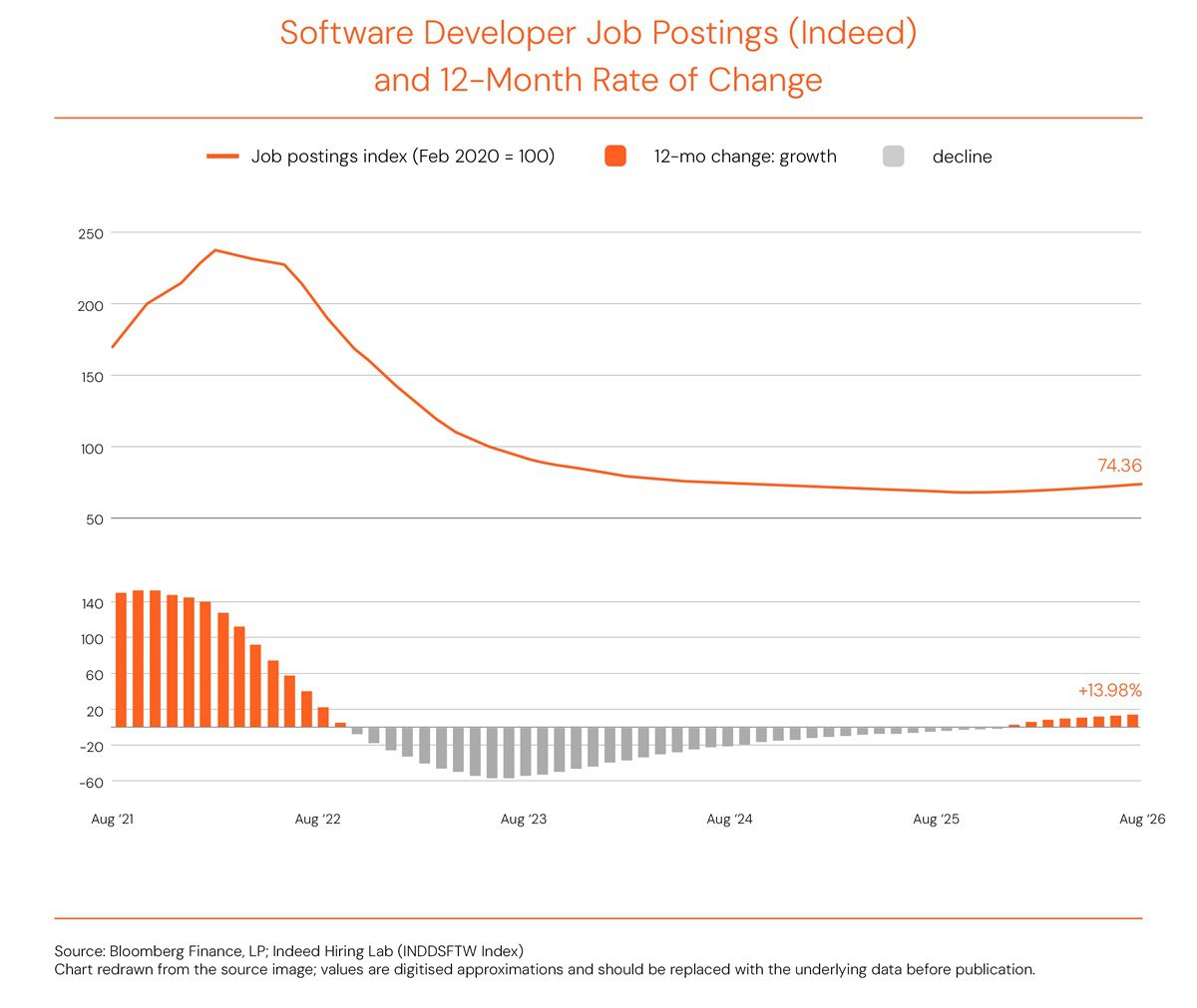
Despite rising tech layoffs, software developer job postings are rising year-over-year for the first time since 2022, up roughly 14%. The index stands at 74.4 against a February 2020 baseline of 100, meaning postings remain about 25% below pre-pandemic levels. What matters most, is the change in direction after three years of decline followed by a long plateau.
What this means for you: When viewed against the layoff data, the increase points to a reshuffling of talent rather than a shrinking market. Demand is returning for developers who work well with AI tools, and much of that demand is coming from outside traditional tech companies. If hiring technical talent is part of your 2027 plan, today’s favorable window may not stay open for long.
4. Chipmakers are investing for a long AI cycle
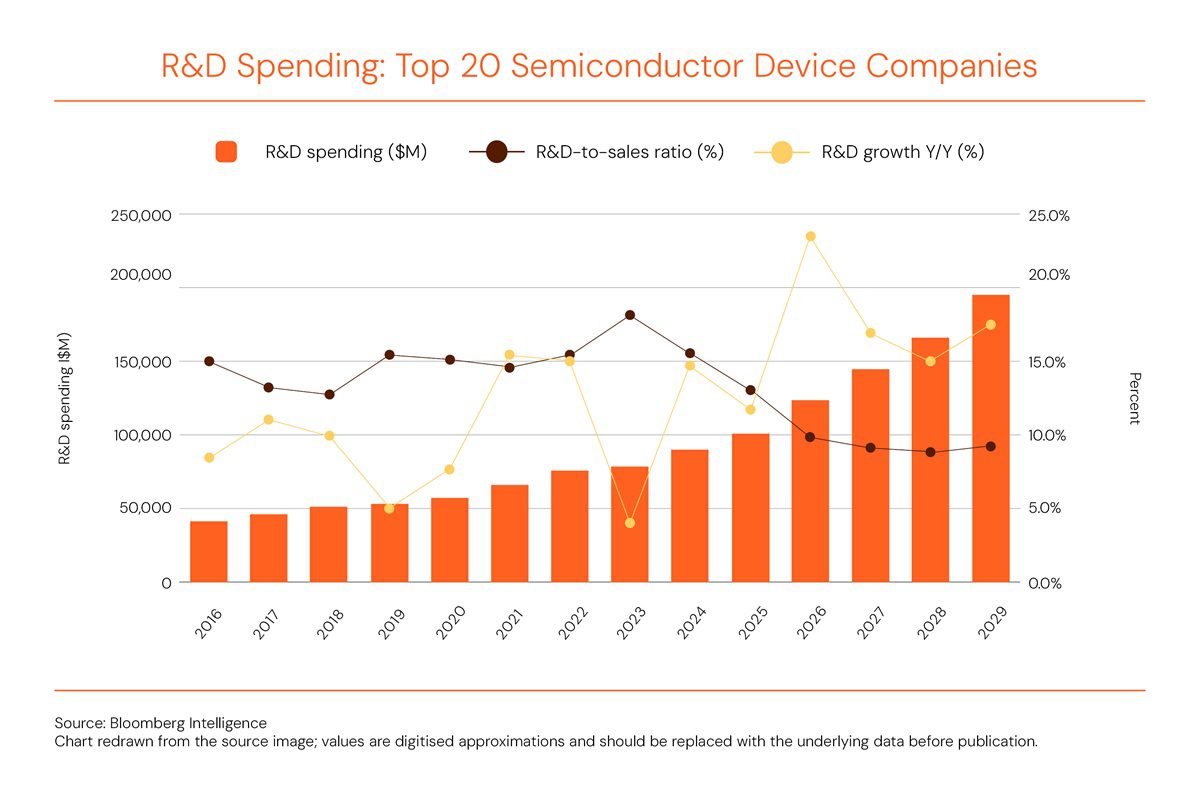
Research and development (R&D) spending across the top 20 largest semiconductor device companies is projected to reach roughly $195 billion by 2029, up from about $42 billion in 2016. Year-over-year growth is estimated to peak near 24% in 2026. Over the same period, R&D spending as a share of sales is projected to decline from a high of nearly 18% in 2023 to about 9% by 2029, suggesting that revenue may grow faster than research budgets.
What this means for you: Chipmakers are betting AI demand is a long-term phenomenon that will last for years, not quarters. Rising investment coupled with smaller R&D share of sales, signals confidence in the industry’s growth. Expect continued gains in AI hardware performance, but the sector’s momentum now rests on a handful of companies, making their guidance important to watch.
5. Fewer software deals and far larger checks
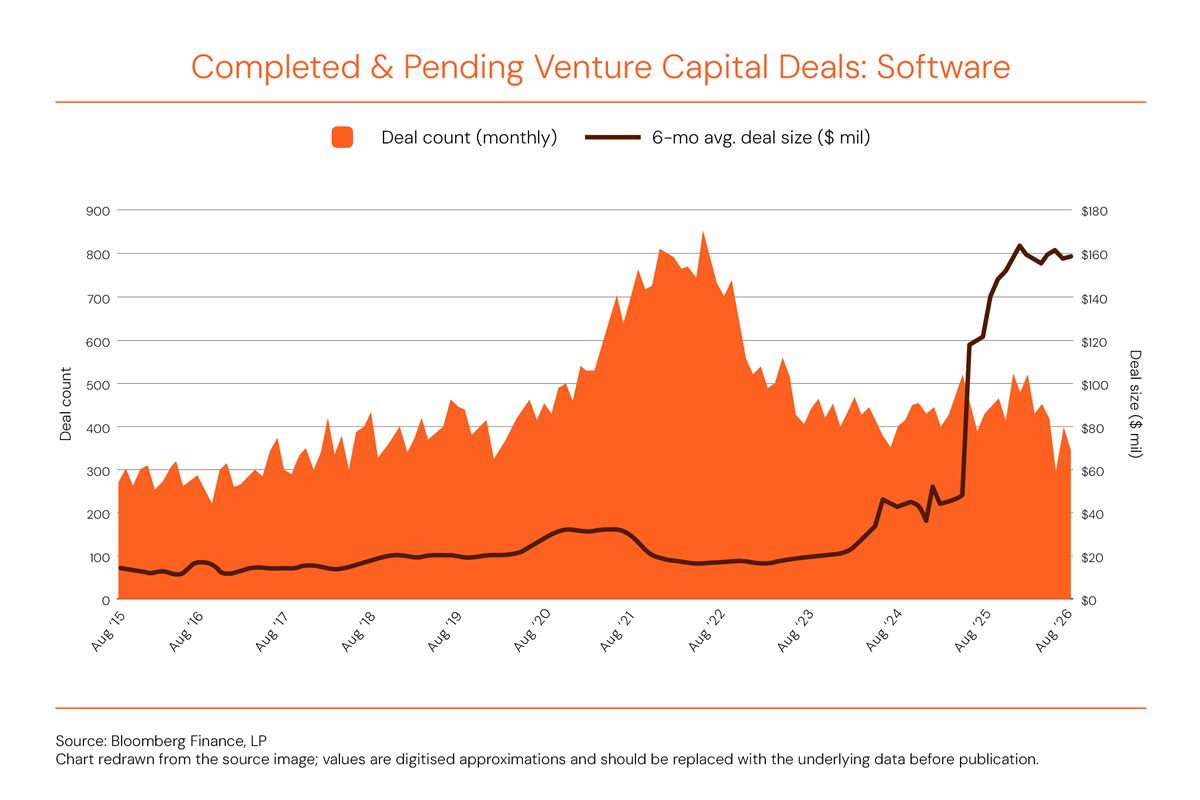
Monthly venture capital deal volume in software has settled at roughly 350 to 400 deals, close to where it stood in 2016 and well below the early 2022 peak above 850. Average deal size has moved sharply in the other direction. The six-month average has climbed from roughly $16 million in 2023 to more than $160 million in 2026, with most of that increase arriving in the past year.
What this means for you: Capital is still available, but it’s concentrating among a small group of companies raising very large rounds. Early-stage founders should plan for longer fundraising cycles and tighter scrutiny of unit economics. If you compete against a well-funded rival, assume their capital edge is wider than the deal count suggests.
6. AI compute costs are climbing
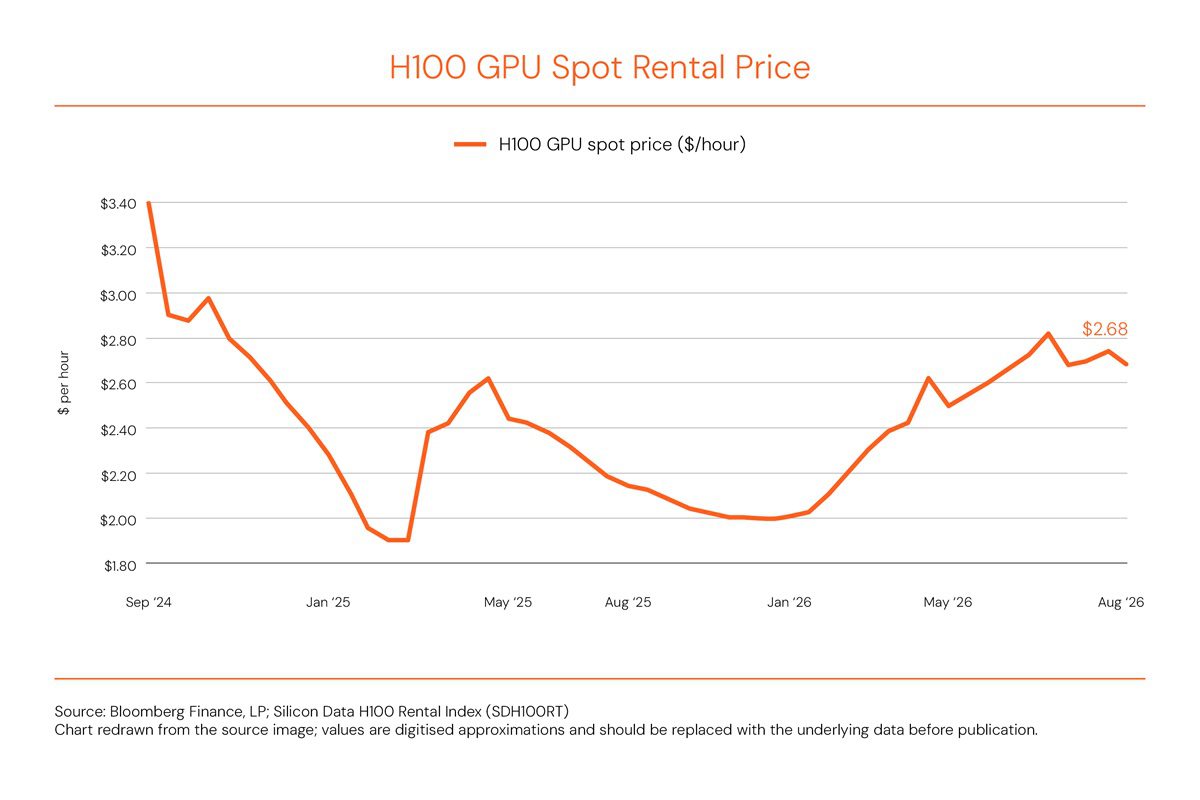
The H100 GPU spot rental price has climbed to $2.68 per hour, up roughly 37% from its late-2025 low near $1.95. After prices fell steadily through 2024 and much of 2025, that trend has now reversed for three consecutive quarters. Current levels remain below the $3.40 reached in September 2024, making this is a rebound rather than a new high.
What this means for you: AI compute costs can no longer fall automatically. If your pricing or margins depend on inference costs, revisit those assumptions and leave room for further increases. Longer-term capacity deals can stabilize costs but weigh that against paying for capacity you don’t use.
This commentary is brought to you by our advisors at Aprio.
Disclosures
Investment advisory services are offered by Aprio Wealth Management, LLC, a Securities and Exchange Commission Registered Investment Advisor. Opinions expressed are as of the publication date and subject to change without notice. Aprio Wealth Management, LLC shall not be responsible for any trading decisions, damages, or other losses resulting from, or related to, the information, data, analyses or opinions contained herein or their use, which do not constitute investment advice, are provided as of the date written, are provided solely for informational purposes and therefore are not an offer to buy or sell a security. This commentary is for informational purposes only and has not been tailored to suit any individual. References to specific securities or investment options should not be considered an offer to purchase or sell that specific investment.
This commentary contains certain forward-looking statements. Forward-looking statements involve known and unknown risks, uncertainties and other factors which may cause the actual results to differ materially and/or substantially from any future results, performance or achievements expressed or implied by those projected in the forward-looking statements for any reason. No graph, chart, or formula in this presentation can be used in and of itself to determine which securities to buy or sell, when to buy or sell securities, whether to invest using this investment strategy, or whether to engage Aprio Wealth Management, LLC’s investment advisory services.
Investments in securities are subject to investment risk, including possible loss of principal. Prices of securities may fluctuate from time to time and may even become valueless. Any securities mentioned in this commentary are not FDIC-insured, may lose value, and are not guaranteed by a bank or other financial institution. Before making any investment decision, investors should read and consider all the relevant investment product information. Investors should seriously consider if the investment is suitable for them by referencing their own financial position, investment objectives, and risk profile before making any investment decision. There can be no assurance that any financial strategy will be successful.
Certain investor qualifications may apply. Definitions for Qualified Purchaser, Qualified Client and Accredited Investor can be found from multiple sources online or in the SEC’s glossary found here https://www.sec.gov/education/glossary/jargon-z#Q