



Summary: The U.S. Tax Court recently issued a memorandum opinion addressing a disputed R&D tax credit claimed for agricultural experimentation. While the case underscores the importance of proper documentation, particularly amended returns, the court’s rulings also reaffirm that agricultural research activities can qualify for the R&D tax credit.
Agricultural Innovation as Qualified Research
Many agricultural businesses already perform work that aligns squarely with the “tax definition” of qualified research, even if they don’t think of it as “R&D” in the “traditional sense.” Feed trials, genetics testing, and production-scale experimentation are common examples of agricultural activities that can qualify for the R&D tax credit when supported by appropriate documentation.
Examples of qualified agricultural activities can include:
- Development of new disease-resistant livestock and/or crops
- Hybridization or development of new strains of crops or plants
- Development of experimentation with new feeds of livestock
- Development of precision farming techniques to increase yield and/or production efficiency
- Development of new gene transfer technologies
- Design of new irrigation systems to reduce water consumption
- Development of ways to increase milk/egg production
- Development of new or improved canopy, pruning, and vineyard techniques
Identifying Qualified Agricultural Activities
Understanding the tax criteria can help clarify which agricultural initiatives rise to the level of qualified research. Agricultural experimentation may qualify for the R&D tax credit when it meets the following criteria:
- A permitted purpose (new or improved functionality, performance, reliability, or quality)
- Technological principles (agronomy, plant physiology, animal nutrition science, biology, chemistry, agricultural science, engineering)
- Technical uncertainty (capability of achieving optimal nutrient profiles, methodology for improving uptake efficiency or disease resistance, appropriate design of environmental controls)
- A process of experimentation (controlled trials, testing variables, iterative formulation adjustments)
The importance of identifying and robustly substantiating these activities was central to the court’s analysis in George v. Commissioner, which illustrates how the IRS and the Tax Court evaluate agricultural R&D in practice.
Under the Microscope: Georgia v. Commissioner
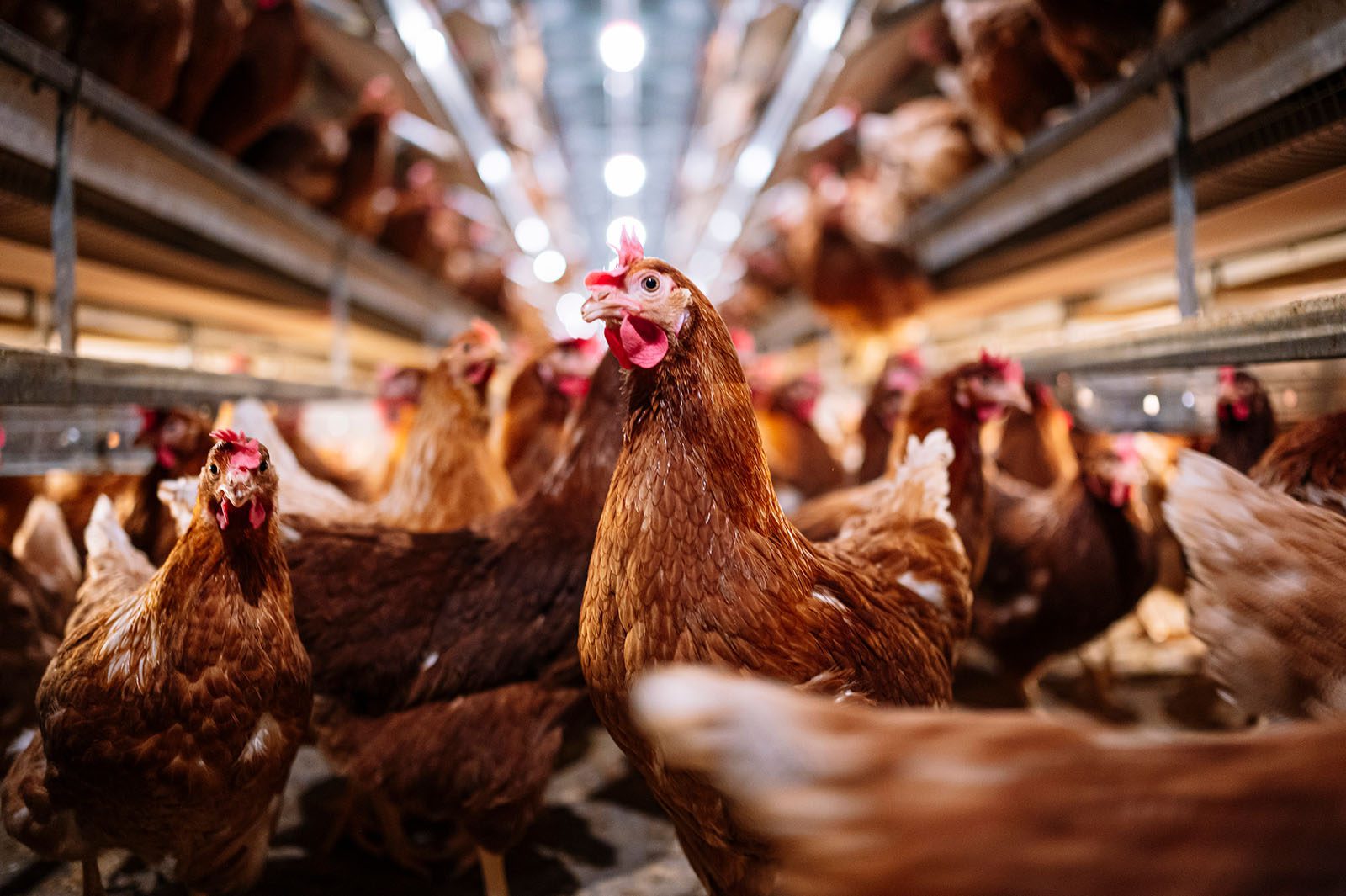
On February 3, 2026, the U.S. Tax Court issued a memorandum opinion about a landmark court case involving R&D tax credits claimed by a poultry producer over several years. George’s of Missouri, Inc. (GOMI), a poultry producer, claimed research credits for activities that aimed to improve broiler chicken products between 2012 and 2014, which flowed through to amended individual returns for 2011, 2012, 2014, and 2016. The credits were based on research trials aimed at developing an improved poultry product, which included experimentation with feed additives, vaccines, probiotics, and disease prevention strategies.
The IRS initially disallowed all credits and imposed accuracy related penalties for 2014 and 2016, arguing that the alleged trials were merely post hoc recharacterizations of routine data collection. When the case reached the U.S. Tax Court, the primary dispute centered on whether GOMI actually conducted qualified research during the years at issue or whether the claimed trials lacked contemporaneous evidence. The Court ultimately evaluated each trial based on the presence or absence of adequate contemporaneous documentation supporting the R&D tax credit requirements under Section 41, the results of which were published in the memorandum opinion.
Court Rulings: Substantiation Requirements for R&D Credits
Though the case hinged on what solid evidence the taxpayer could provide to substantiate their credit claims, the court issued three key rulings:
- Costs to raise a “pilot model” can count as qualified research expenditures (QREs).
- Taxpayers do not need to claim wage expenses to claim supply expenses as QREs.
- The use of estimates for base period QREs without a factual basis is not permitted.
Based on these rulings, the court allowed GOMI to claim the R&D credit for certain activities—such as a trial testing a new genetic broiler line and developing a vaccine priming method—but disallowed the credits for other activities, due to a lack of contemporaneous documentation.
Although agricultural experimentation of this nature can qualify, the court disallowed the claimed credits for certain activities because GOMI could not substantiate the activities or the associated base‑period QREs with adequate contemporaneous documentation. Further, the court would not accept base-period QRE estimates without a factual foundation and, therefore, required a less favorable credit computation with a lower credit rate. However, this decision further underscores the importance of maintaining supporting documentation as evidence that the activities meet the qualification criteria.
Three Key Takeaways from George v. Commissioner
It’s important to note that GOMI’s credits were not disallowed because of the type of activities they performed, but because they did not have the documentation to support their claims. Consequently, there are several lessons we can learn from the George v. Commissioner case and the Tax Court’s analysis of building robust credit claims.
- Agricultural activities can be great candidates for R&D tax credits
The court’s rulings confirmed that feed trials, genetics testing, and production-scale experimentation can qualify for R&D credits as long as there is an element of technical uncertainty and iterative experimentation in achieving the project’s objectives. For instance, scaling production is not inherently experimental, though it can qualify if there is uncertainty in the outcome or design, and experimentation is required to overcome it. - Documentation is the deciding factor
Taxpayers must be able to substantiate that the research activities they claim QREs for meet the qualification criteria. In instances where the taxpayer was able to provide the court with contemporaneous documentation that corroborated their claims, such as feed recipes and production data, the credits were more likely to be allowed. - The base period matters—even years later
Although there are cases where the Cohan rule (which allows reasonable estimates based on testimony when exact records are unavailable) can be applied in calculations for the credit, there must be some substantiated by contemporaneous documentation to operate on. Contemporaneous workpapers, such as trial design documents, grow-out records, and evidence of employee involvement, could have materially strengthened GOMI’s base-period support and undercut the IRS’s argument that the base was conjectural.
The presence and quality of contemporaneous documentation can make or break an R&D credit claim, which is why it is paramount to maintain relevant and appropriate evidence of research activities for at least the statute of limitations.
Final Thoughts: Reap the Rewards with Confidence
Claiming the R&D tax credit does not have to be complicated, and the tax benefits and cash savings are often well worth it, especially for small businesses. Be sure to heed the lessons learned from George v. Commissioner to minimize risks and claim your R&D tax credit with confidence.
Enlist the help of a knowledgeable tax professional to identify qualified initiatives, accurately calculate your tax benefit, and build a defensible case with substantiating documentation.