



Summary: Restaurant and franchise operators face growing pressure to manage staffing shortages, rising labor costs, evolving compliance requirements, and increasingly complex accounting processes. Learn how outsourced accounting and advisory support can help your restaurant organization reduce operational risk, improve efficiency, and focus on sustainable growth.
In a market where cost-effective scalability is everything, restaurant operators are under more pressure than ever to balance growth, operational efficiency, and profitability. For many owners, those challenges extend far beyond the front of the house and into the back office.
As you scale your own restaurant operation, you may find that managing accounting, payroll, reporting, tax compliance, and financial oversight internally can become increasingly difficult. While some organizations prefer to build in-house accounting teams, doing so often introduces operational risks, staffing challenges, and hidden costs that can hinder long-term growth.
If you are evaluating your restaurant’s back-office strategy on the path to growth, it’s essential for you to understand these challenges and master them to build a more scalable and resilient financial operation. Below, we outline a few challenges and opportunities you can leverage to reduce back-office and accounting strains and position your organization for sustainability.
The Hidden Challenges of In-House Accounting Teams
Many restaurant groups begin with lean internal accounting functions, often relying on a small team or even a single trusted employee to manage payroll, bookkeeping, accounts payable, reporting, and financial administration. While this approach may have worked for you in the early stages, it can quickly create strain as your business expands.
One of the most significant challenges growing businesses encounter is staffing volatility. Internal teams often lack the bandwidth to absorb disruptions caused by employee turnover, paid leave, illness, or burnout.
That raises an important question: should you continue managing your accounting internally or is it time to bring in outside support?
In the restaurant industry, timing is critical. Financial reporting, payroll processing, and month-end close procedures operate on strict schedules. Every restaurant owner knows the feeling of scrambling to maintain continuity when one of their key employees is on vacation or out sick.
In most restaurants, this creates pressure for both ownership and accounting staff members. In our experiences working with restaurant teams, we often see that internal accounting staff members feel like they can never fully step away from their jobs. They are often limited on when they can take time off because the business depends so heavily on them to keep operations running smoothly.
Rising Employment Costs Continue to Pressure Restaurant Operators
Building and employing a full internal accounting department comes with significant financial overhead, which many restaurant operators tend to underestimate. Beyond salaries, operators must account for:
- Payroll taxes
- Health insurance and employee benefits
- Retirement contributions
- Office space and equipment
- Technology and software investments
- IT support and system maintenance
- Recruiting and training costs
At the same time, the accounting talent pool continues to shrink. Across the accounting profession, experienced CPAs are retiring at high rates while universities report declining accounting program enrollment. As demand outpaces supply, qualified accounting professionals are commanding increasingly competitive compensation packages. For a restaurant operator who is likely managing tight margins as it is, these costs can add up quickly.
Technology Expectations are Increasing
Modern restaurant accounting is no longer limited to spreadsheets and manual reconciliations. Operators are now expected to leverage advanced financial technology platforms, automation tools, and AI-driven systems to improve efficiency and visibility.
However, implementing and maintaining these tools requires both financial investment and specialized experience. Some of the most popular modern systems on the market include:
- Restaurant365
- Sage Intacct
- QuickBooks
- Payroll and workforce management platforms
- Delivery app integrations
- Merchant processing systems
- AI-enabled reporting and automation tools
Each platform introduces additional layers of complexity, training requirements, and ongoing support needs that you need to consider as you look to transform your restaurant’s technology stack. The trick is finding professionals who already understand the types of systems you need, which can be difficult in the quick-service restaurant (QSR) industry where operational workflows are highly specialized.
Compliance Risks Continue to Grow
As restaurant businesses expand across locations and jurisdictions, compliance obligations become significantly more complex. As an operator, you’re tasked with navigating evolving requirements related to:
- Payroll and labor regulations
- Meal and break compliance laws
- Sales tax filings
- Personal property tax
- State and local income taxes
- Pass-through entity taxes
- Multi-state payroll compliance
States like California, Colorado, Oregon, Washington, Illinois, and New York have introduced increasingly strict labor and payroll regulations, with significant noncompliance penalties. In some cases, restaurant operators may face six- or seven-figure exposure related to payroll compliance violations alone.
The stakes are high, and compliance isn’t getting easier. And if you rely on a small internal accounting team to get things done, it can be even more challenging to keep pace with changing regulations and obligations.
Internal Control Gaps Can Create Additional Risk
Another challenge many restaurant groups face is maintaining proper internal controls.
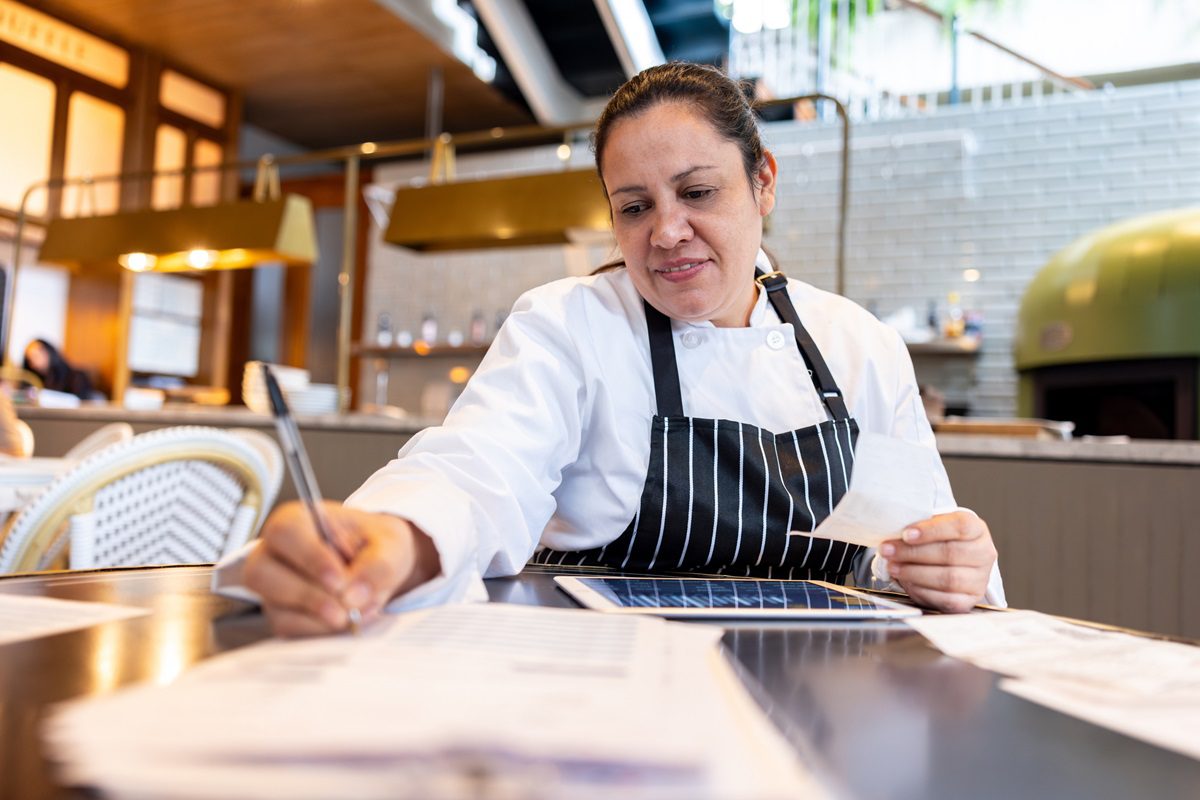
When only one or two employees oversee your payroll, accounts payable, cash management, and reconciliations, you may unintentionally create an environment that is vulnerable to fraud, theft, or financial oversight issues.
As an operator, you likely already have many long-term employees that you trust implicitly. But the reality is that even strong teams benefit from oversight and separation of duties. At the same time, operators often need additional staffing and infrastructure to create more robust internal controls, which increases costs further.
When Does Outsourcing Make Sense?
We have already established that there are both challenges and opportunities when it comes to scaling your restaurant’s back office. So, what is the solution? Many restaurant and franchise operators decide to outsource their accounting and back-office functions for both the strategic and cost-benefit of their business.
The right outsourced provider can offer:
- Access to specialized experience
- Scalable support as your restaurant business grows
- Reduced staffing burden
- Improved continuity and operational resilience
- Enhanced compliance oversight
- Broader industry benchmarking and insights
- Technology guidance and implementation support
Rather than relying on one or two internal employees, operators who outsource their back office can gain access to an entire team of professionals across accounting, payroll, tax, advisory, compliance, and operational support functions.
At Aprio, our restaurant and franchise clients often benefit from collaboration across multiple service areas, including:
- Outsourced accounting and CFO services
- Payroll support
- Tax planning and compliance
- Entity structuring and estate planning
- Transaction advisory and valuation services
- Technology and process optimization
- Franchise acquisition support
This breadth and depth of support can be especially valuable for first-time restaurant or franchise owners who are entering the industry. In many cases, new operators require guidance not only on accounting and reporting, but also on setting up payroll systems, obtaining sales tax permits, onboarding employees, establishing merchant processing relationships, and integrating delivery platforms like Uber Eats, DoorDash, and Grubhub. For operators who are new to the industry, these operational pieces can be exceedingly complex; having a team that has been through the process before can help them get up and running much faster.
A Hybrid Approach May Be the Right Fit
Every restaurant business is unique, and a fully outsourced accounting model may not be right for everyone. For example, larger organizations or restaurant groups may benefit more from a hybrid model, one that combines internal staff with outsourced specialists who can support higher-level accounting, tax, compliance, and strategic advisory needs.
Ultimately, the right approach depends on the organization’s size, growth plans, complexity, and operational goals.
Before determining whether a hybrid method works best for you, take time to think about and evaluate what your business truly needs. For instance, do you only need 50–60 hours of accounting support per month? If so, does it make more financial sense to hire a full-time employee? Solutioning around those questions early on can help prevent operational strain down the road.
Final Thoughts: Focus on Growth, Not Back-Office Complexity
As a restaurant or franchise operator, your success hinges on serving your customers, growing revenue, and scaling your operations, not constantly managing administrative burdens behind the scenes.
By leveraging an experienced accounting and advisory support team, you can ultimately reduce operational risk, improve efficiency, and position your business for sustainable success in an increasingly complex industry.